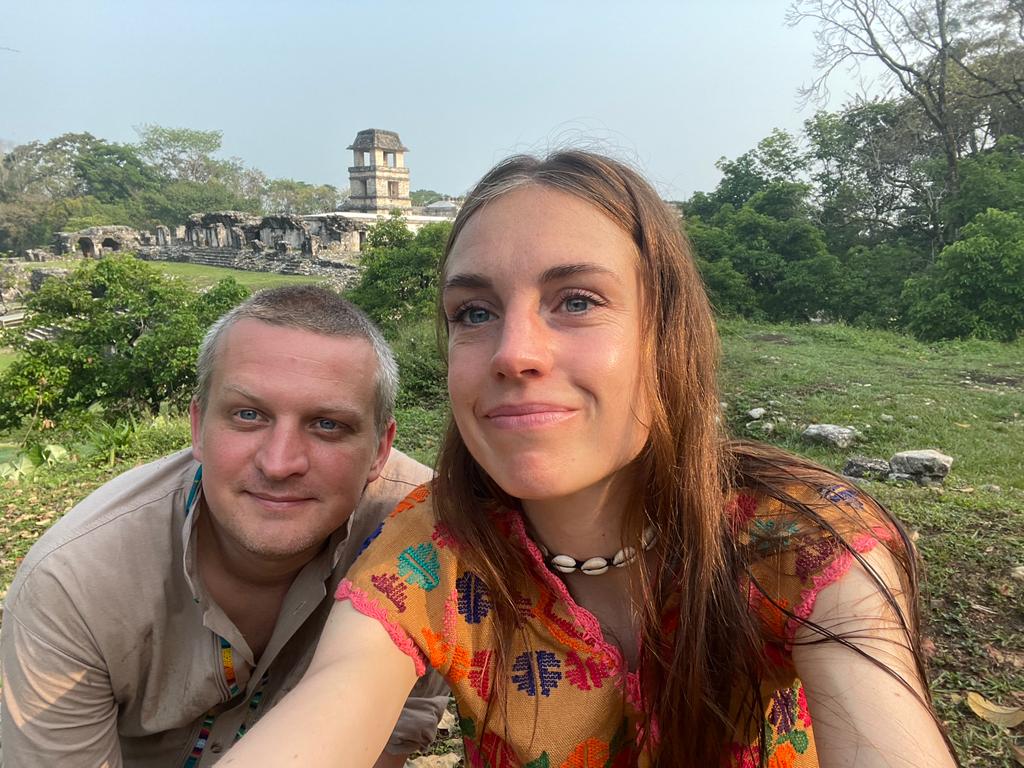
Since only the early bird catches the worm we left the nest early. What the birds did not know was that because of covid you could not climb the pyramids. The upside was that there was still very little people. But still, bitter covid worms…
Teotihuacán, (Nahuatl: “The City of the Gods”) the most important and largest city of pre-Aztec central Mexico, located about 50 km northeast of modern Mexico City. At its apogee (c. 500 CE), it encompassed some 20 square km and supported a population estimated at 125,000–200,000, making it, at the time, one of the largest cities in the world. It was the region’s major economic as well as religious centre.
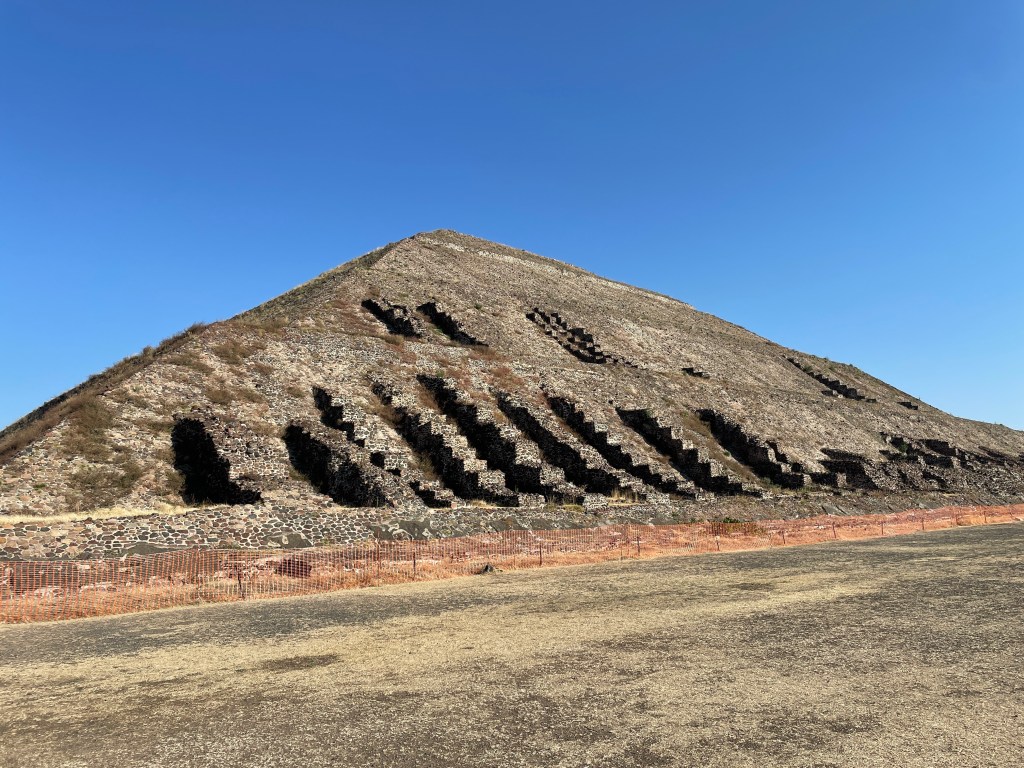
We started with the pyramid of the sun.
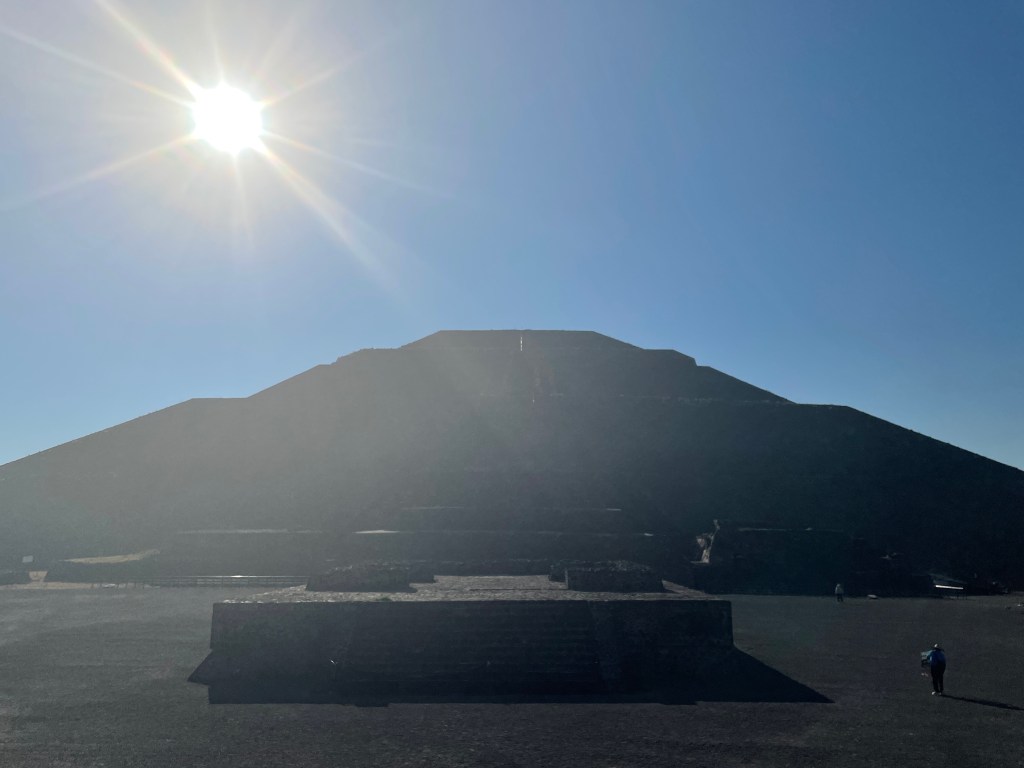
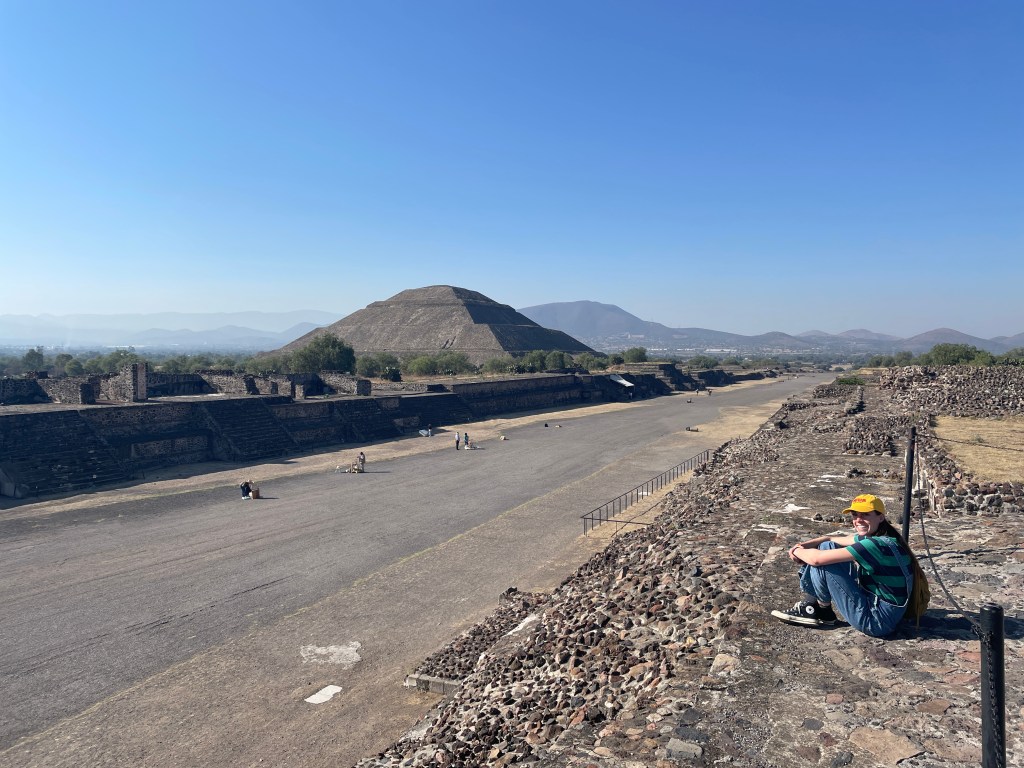
The Pyramid of the Sun is one of the largest structures of its type in the Western Hemisphere. It dominates the central city from the east side of the Avenue of the Dead. The pyramid rises 66 metres above ground level, and it measures approximately 220 by 230 metres at its base. It was constructed of about 765,000 cubic metres of material, including hewed tezontle, a red coarse volcanic rock of the region. During hastily organized restoration work in 1905–10, the architect Leopoldo Batres arbitrarily added a fifth terrace level to the structure, and many of its original facing stones were removed. In the early 1970s exploration below the pyramid revealed a system of cave and tunnel chambers. Over subsequent years other tunnels were revealed throughout the city, and it was suggested that much of the building stone of Teotihuacán was mined there.
Little is known of the people who built Teotihuacán, and the purpose of the Pyramid of the Sun remains largely a matter of conjecture. Archaeologists believe that there was once a temple atop the pyramid. In the early 1970s exploration below the pyramid revealed a system of caves and tunnel chambers, and other tunnels were later found throughout the city. Further discoveries were made in the ensuing decades. In 2011, archaeologists working under the pyramid’s centre reported finding a cache containing shards of clay pots, pieces of obsidian, animal bones, three greenstone human figurines, and a greenstone mask. In addition, walls of what appeared to be three earlier buildings were uncovered. It was announced in 2013 that workers had discovered a covered pit beneath the platform that forms the pyramid’s summit. Within the pit were two pillars and what was described as a figure of the god Huehueteotl, a deity found in the pantheons of several Mesoamerican civilizations.
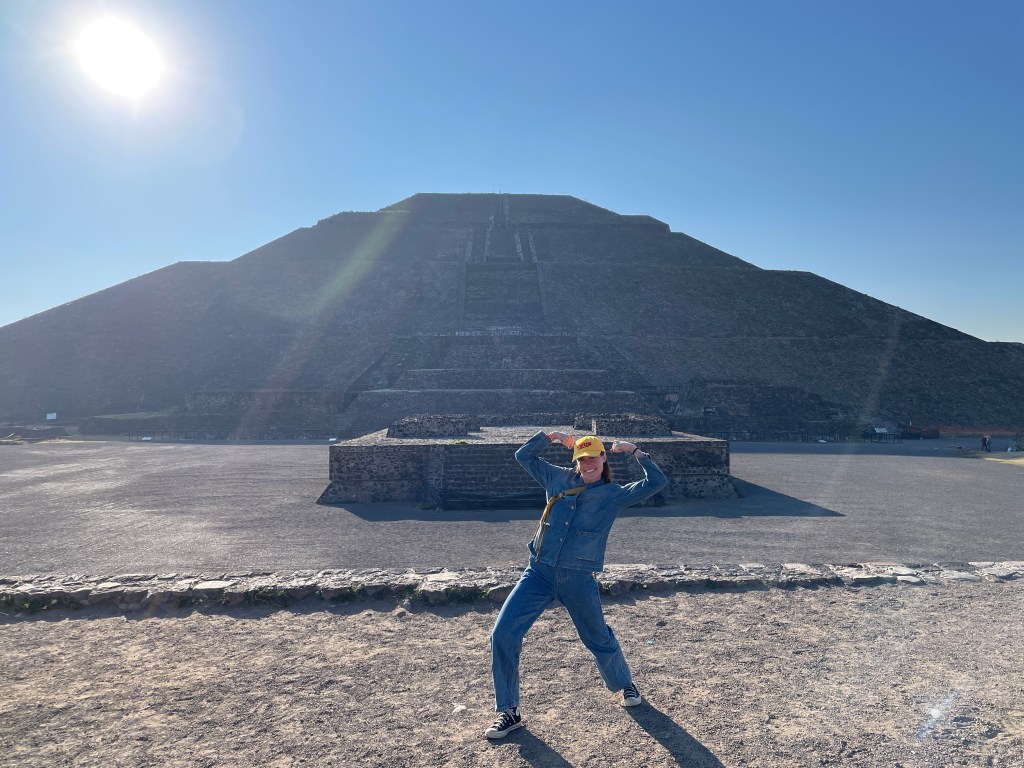
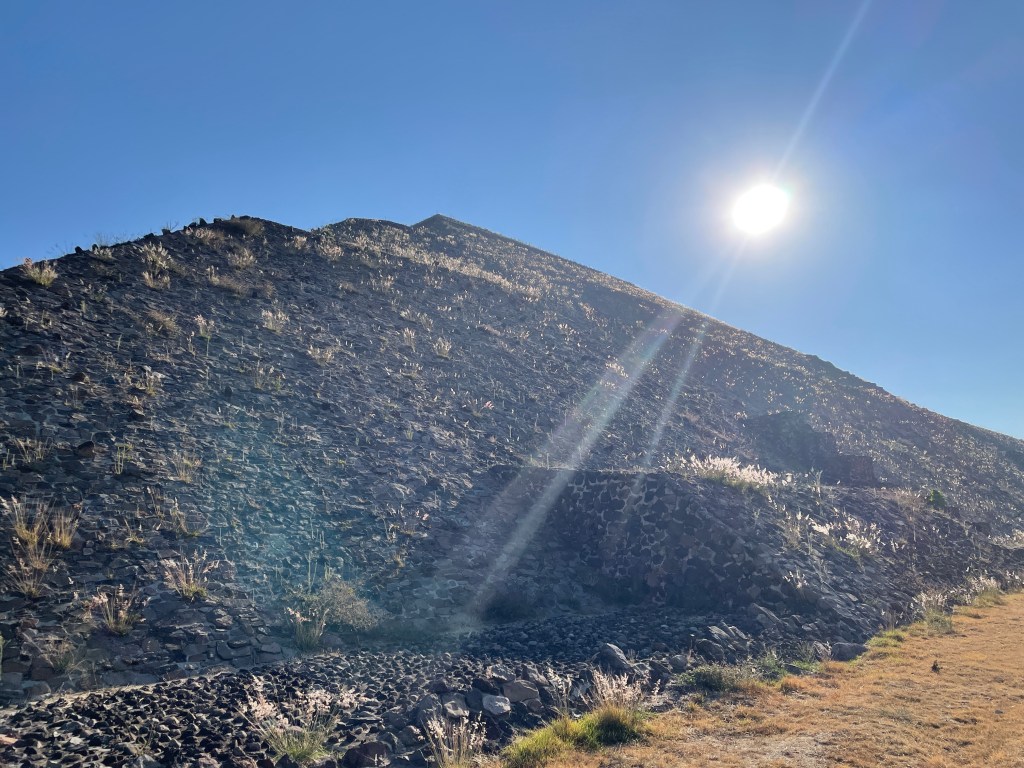
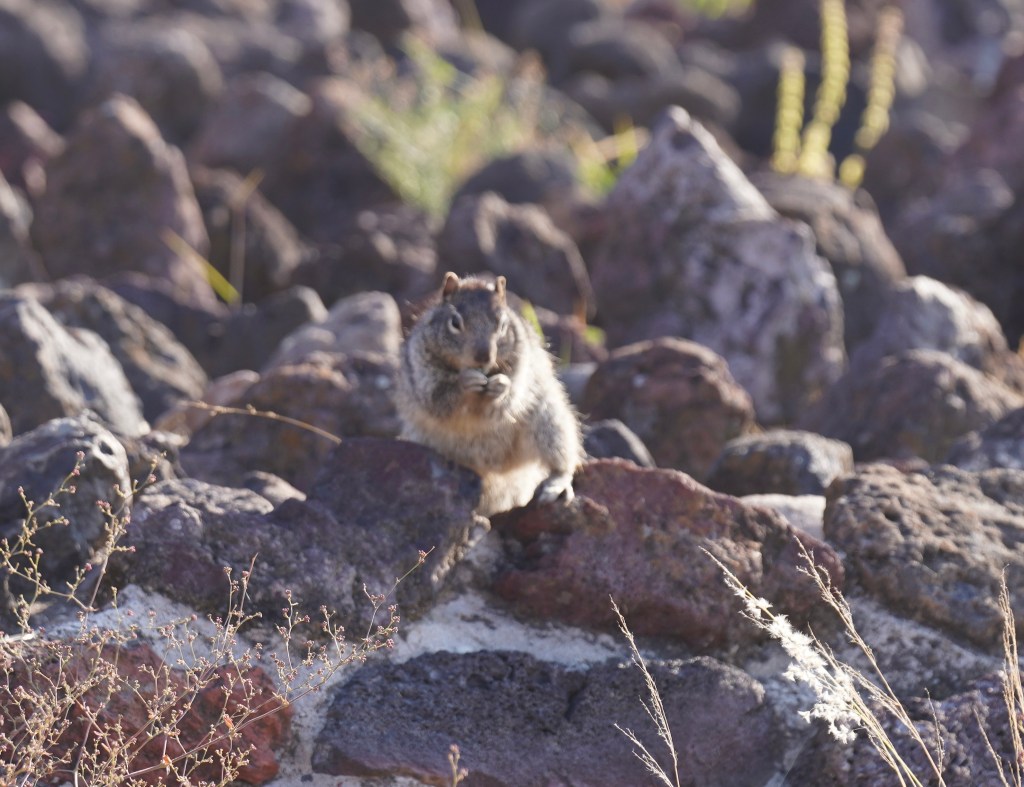
At the bottom of the pyramid some of the reincarnated old gods where checking us out
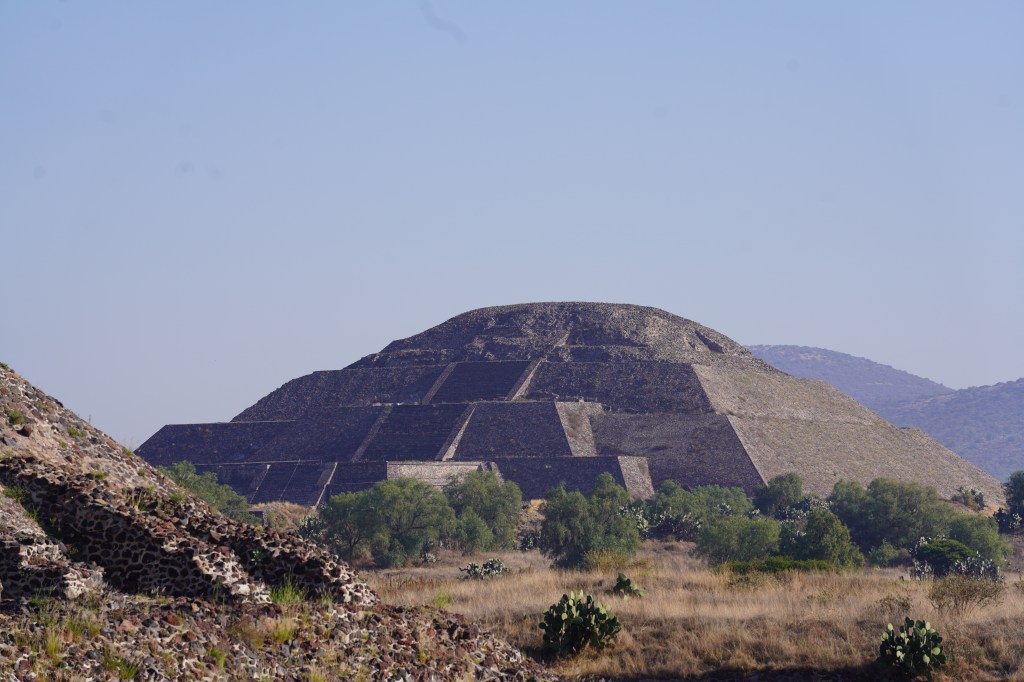
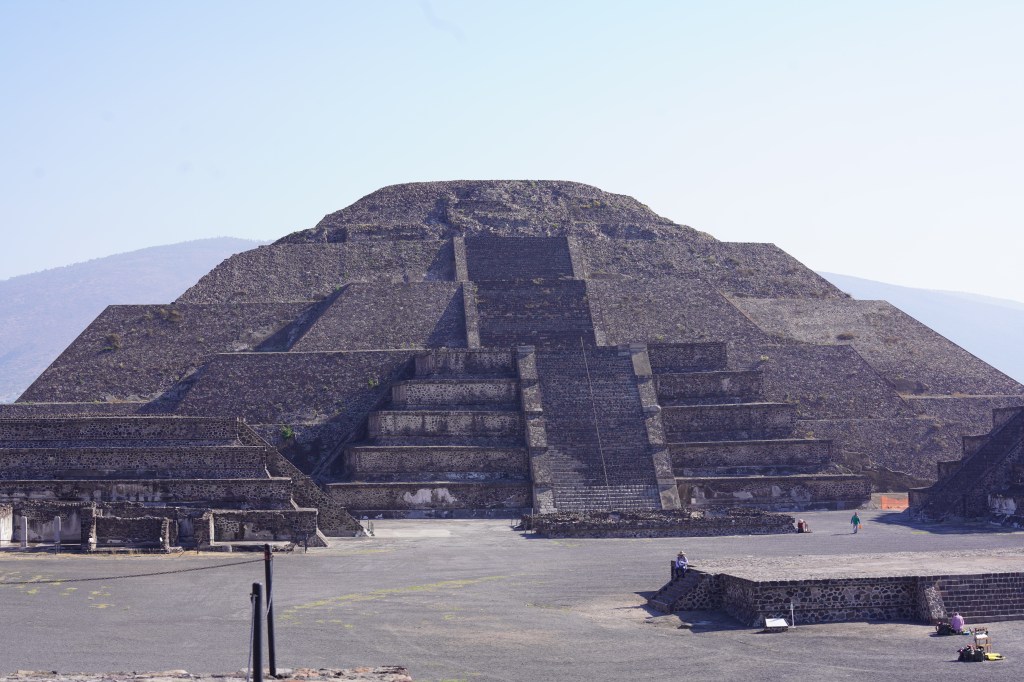
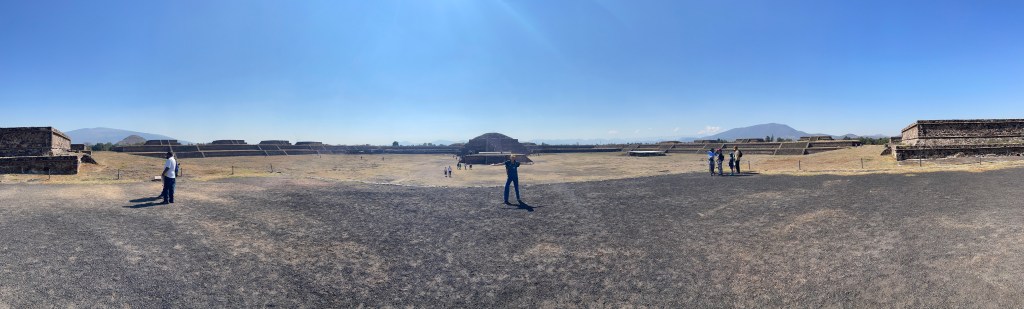
The north end of the Avenue of the Dead is capped by the Pyramid of the Moon and flanked by platforms and lesser pyramids. The second largest structure in the city, the Pyramid of the Moon rises to 43 metres and measures 130 by 156 metres at its base. Its main stairway faces the Avenue of the Dead.Here you can see it from behind the pyramid of the Sun
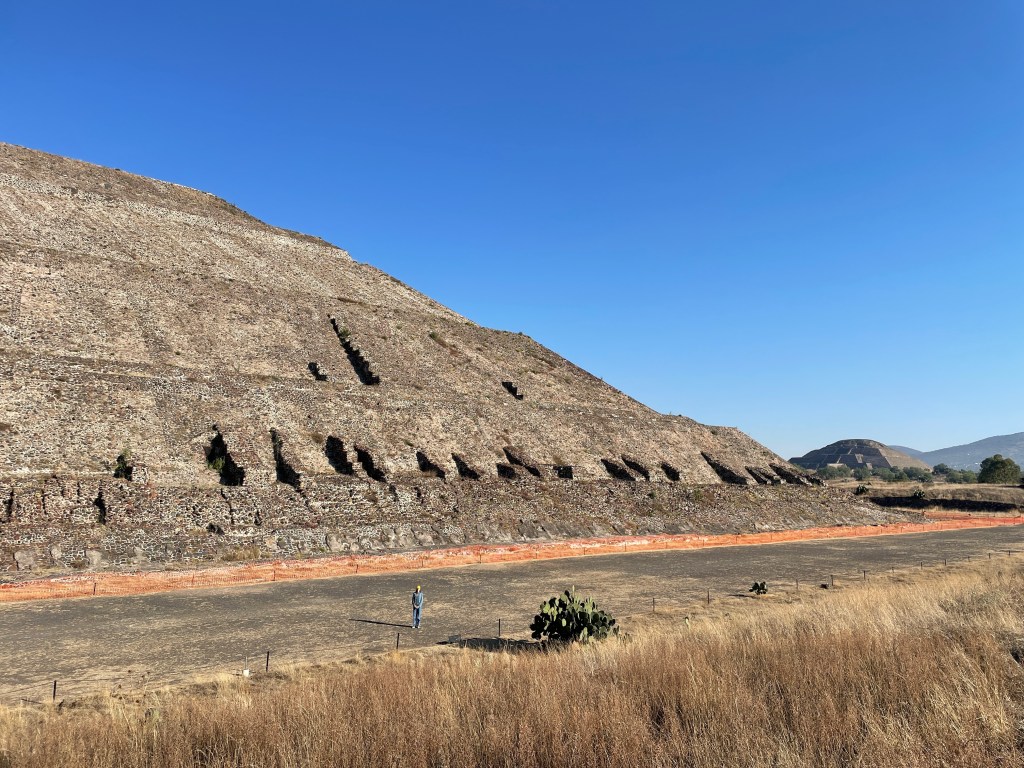
Front
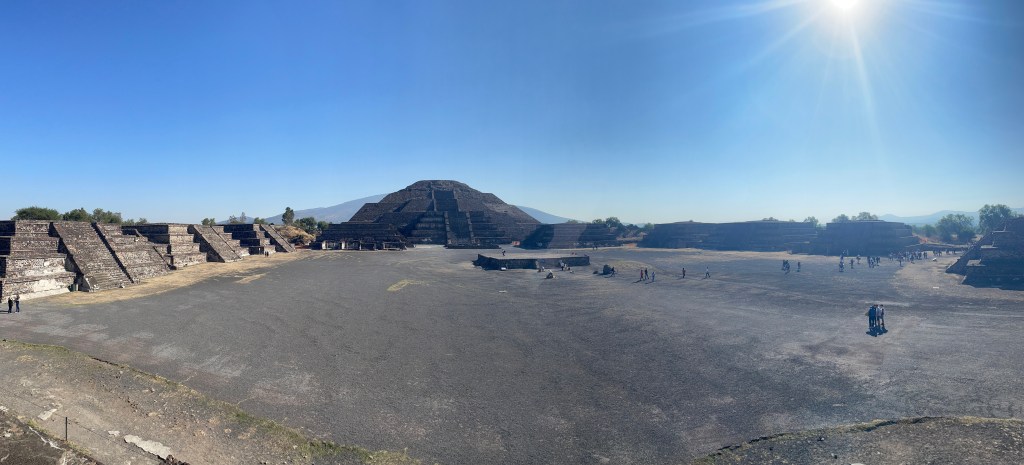
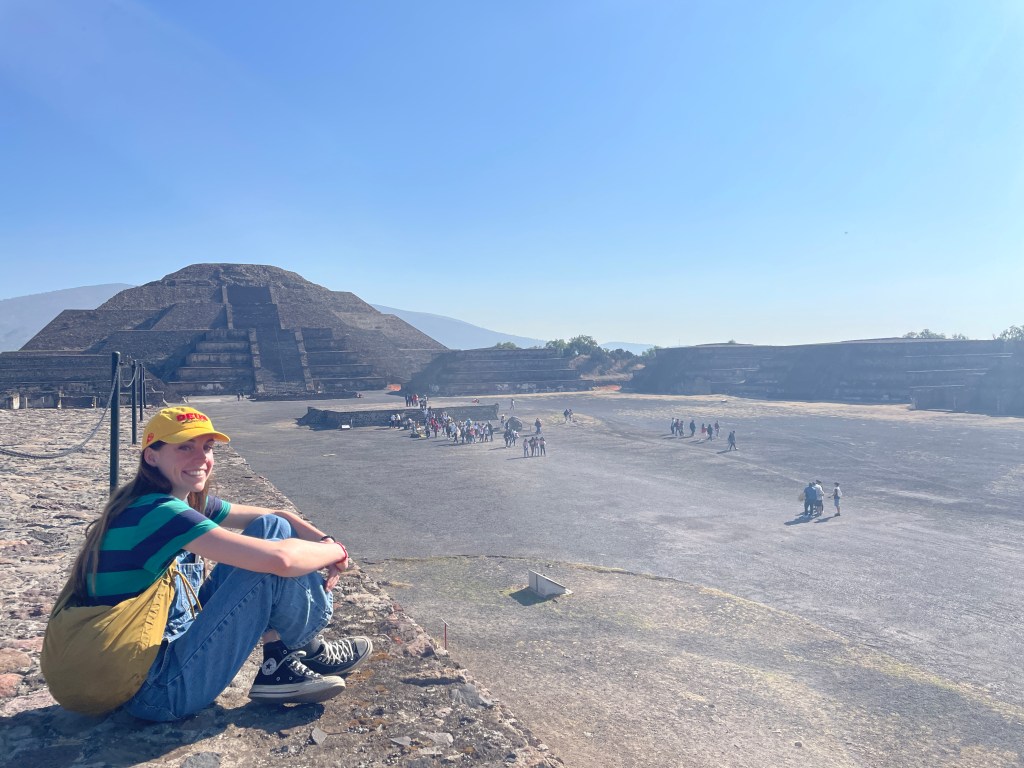
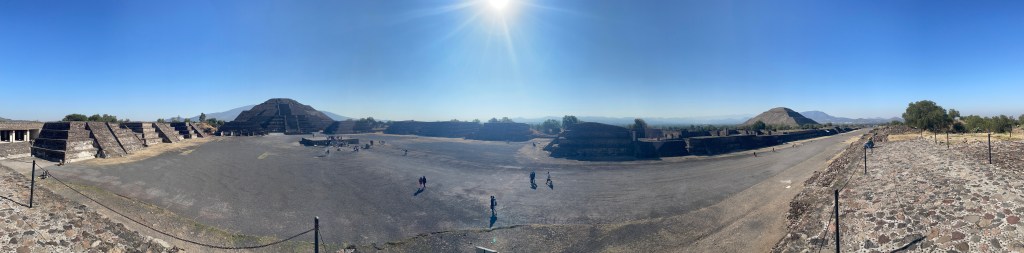
Lu over looking the Avenue of the Dead
The Temple of the Feathered Serpent is the third largest pyramid at Teotihuacan, a pre-Columbian site in central Mexico (the term Teotihuacan, or Teotihuacano, is also used for the whole civilization and cultural complex associated with the site). This structure is notable partly due to the discovery in the 1980s of more than a hundred possibly sacrificial victims found buried beneath the structure.The burials, like the structure, are dated to between 150 and 200 CE. The pyramid takes its name from representations of the Mesoamerican “feathered serpent” deity which covered its sides. These are some of the earliest-known representations of the feathered serpent, often identified with the much-later Aztec god Quetzalcoatl “Temple of the Feathered Serpent” is the modern-day name for the structure; it is also known as the Temple of Quetzalcoatl and the Feathered Serpent Pyramid.
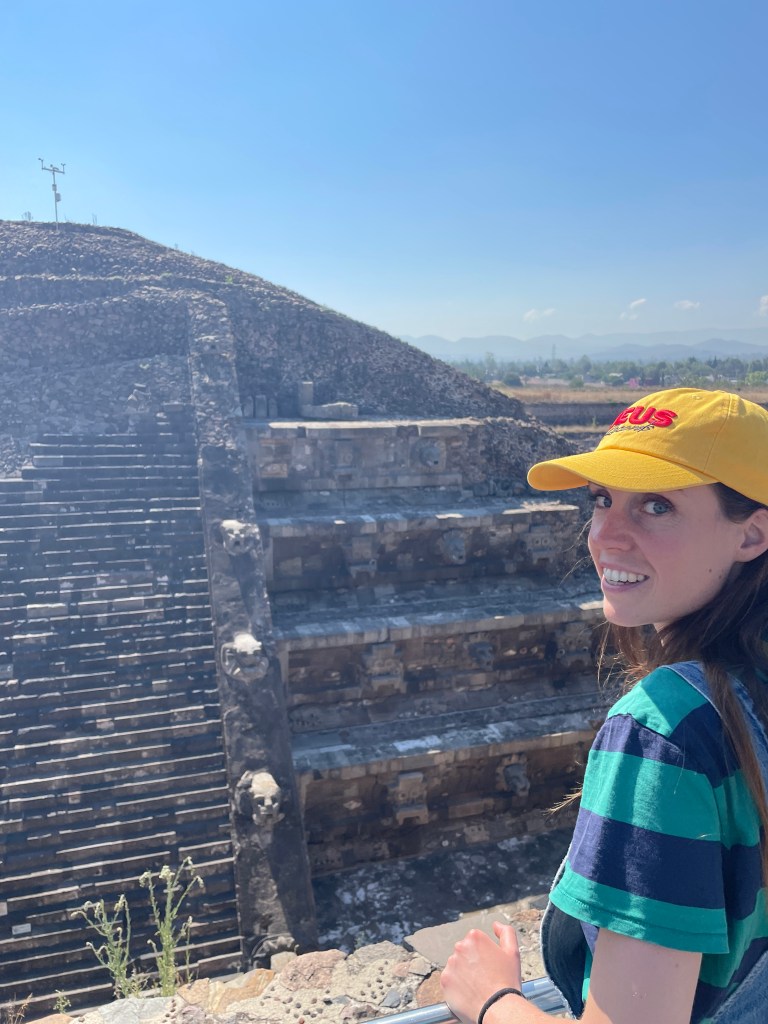
There is also a temple for Quetzalcoatl
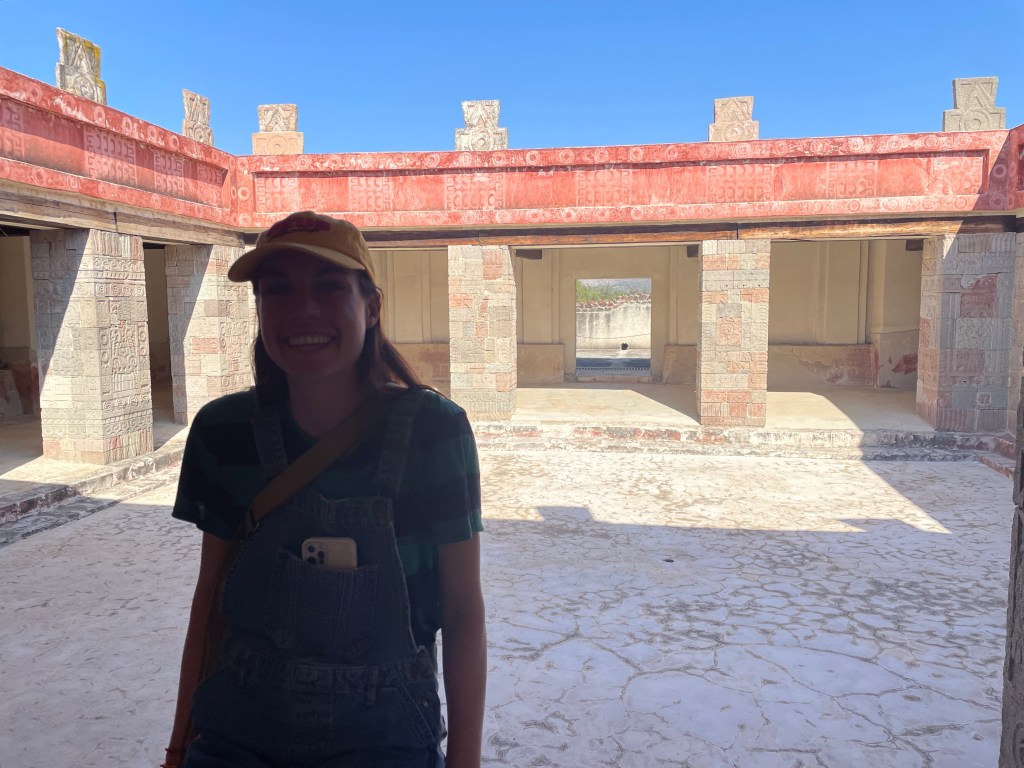
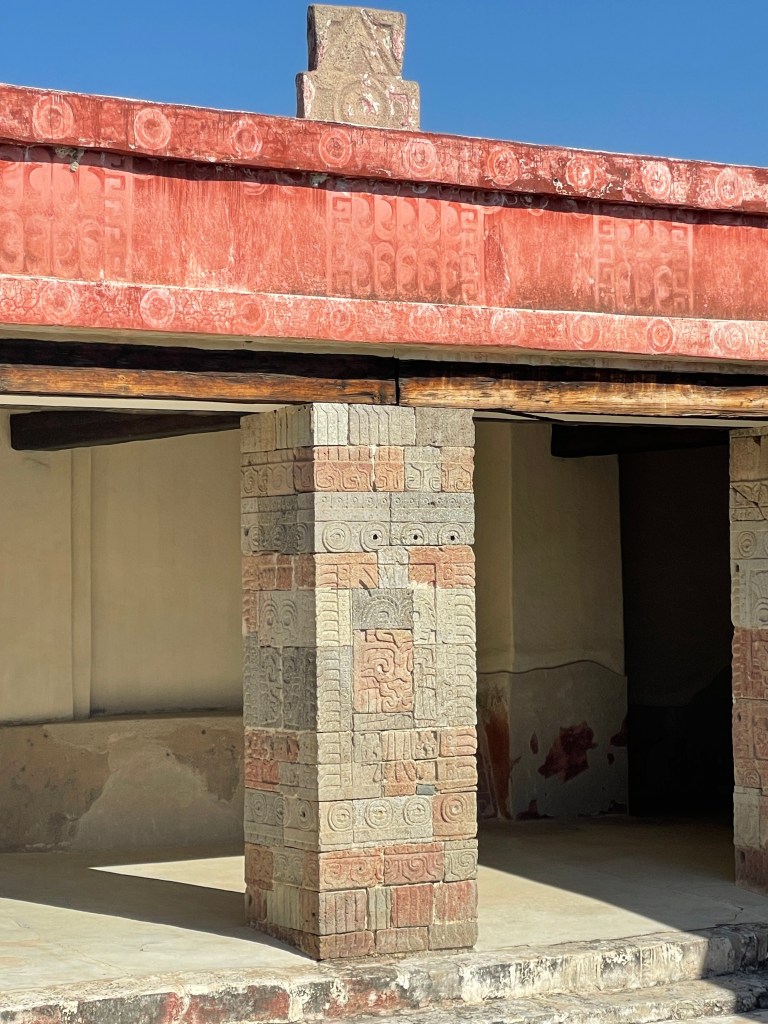
While the humongous size is utterly stunning we somehow missed the mystery of a jungle overgrown Palenque, a mountain top positioned Monte Alban or just the magic that rules Chichen Itza. While we know we cannot compare these place, it still is quite the sight to see and if you ever come this way, just go and check it out !!
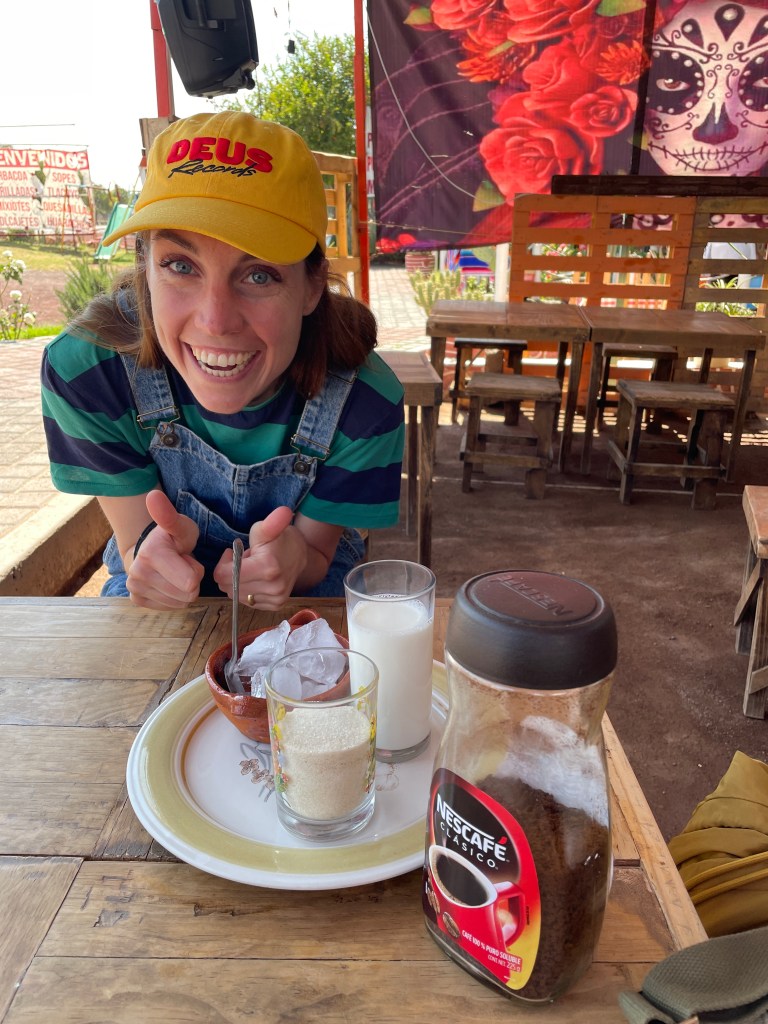
Ps : Best postpyramid coffee ever
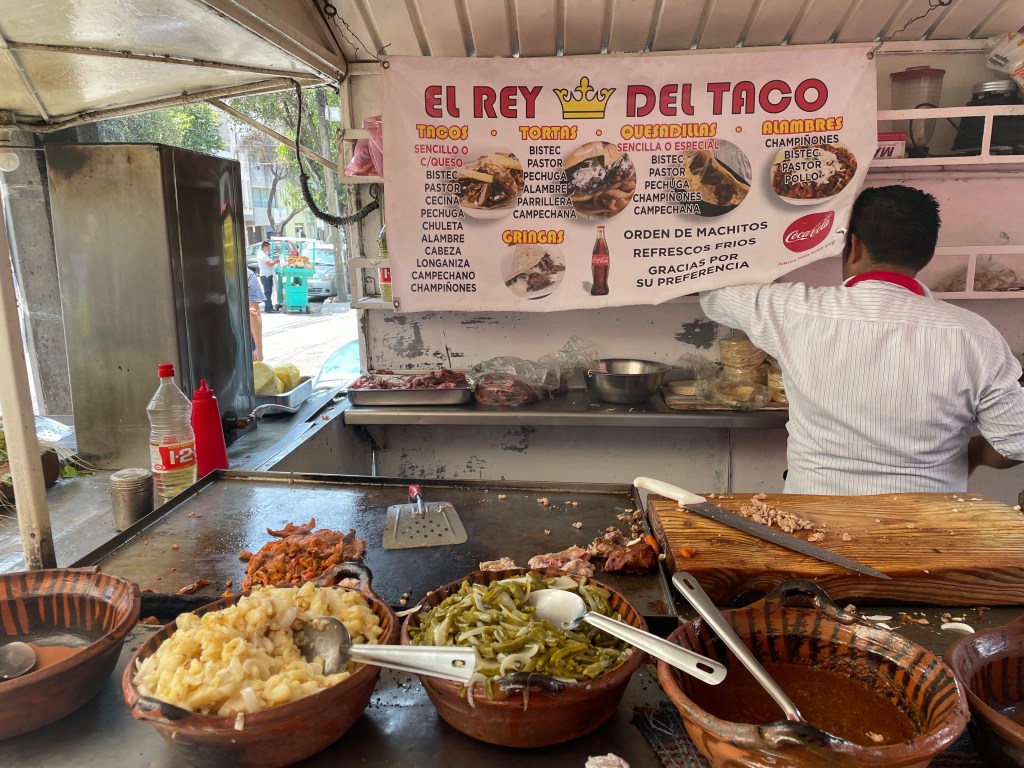
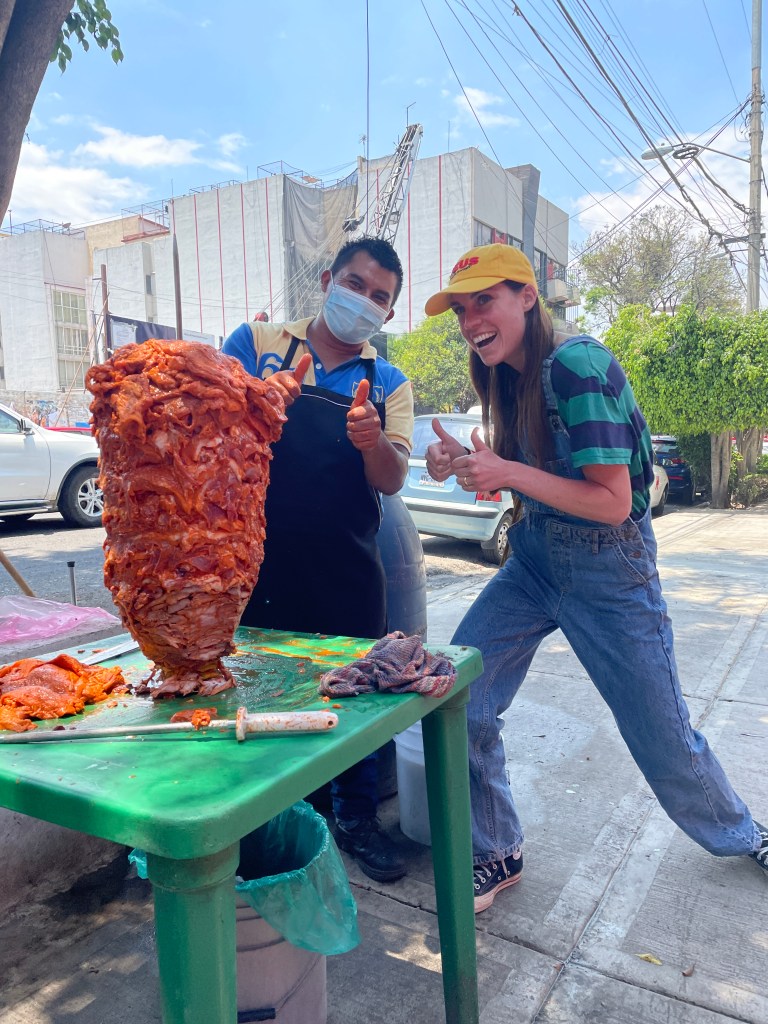
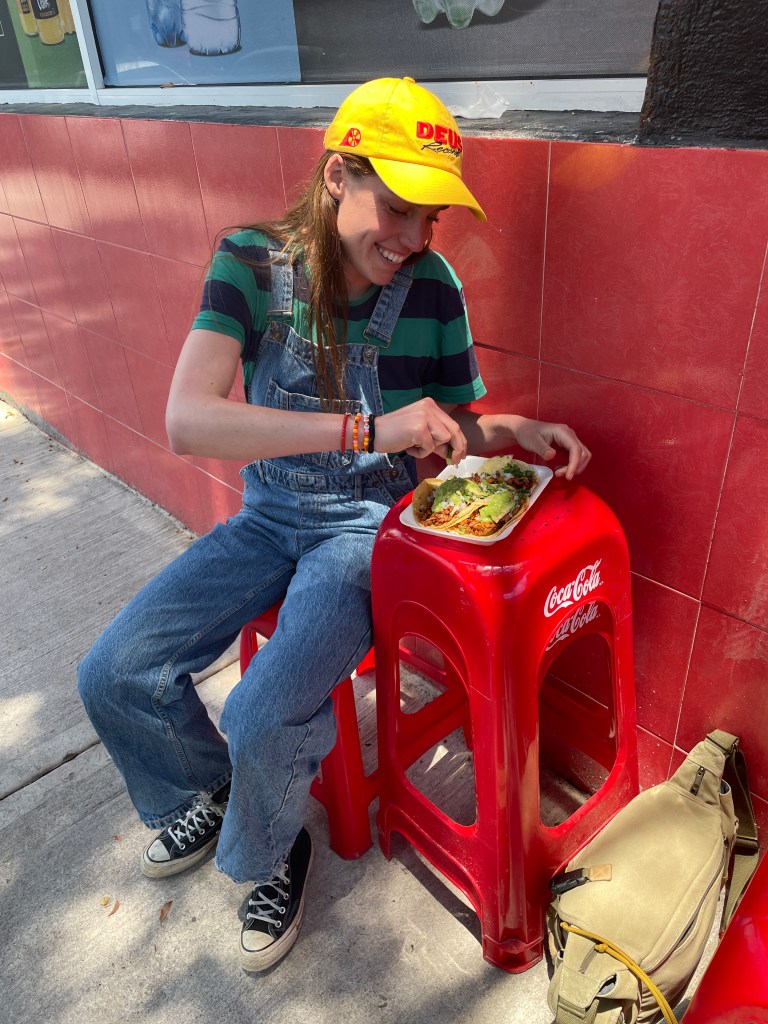
pps: while no orinoco , still on of the better pastors in town (especially after dem pyramids). orinoco still incoming…
and ppps: sorry for pasting all the britannica texts in here but Teotihuacan does deserve some explanation and (while i did not give it justice) it certainly was a thing i was looking forward to for quite a while. If you want to know more ,there is some crazy documentaries linking all the old northern and southern american indio tribes that i am more then happy to share with anyone who is interested. Out for now 😘


 El viaje
Leave a reply to Colly Cancel reply