Lu had some bad food while i was missioning around with Hugo and already felt strange at the Japanese. I will spare you the details but she stayed in the hotel while i went back to the car part store. And boom, not one, but over night they got 2 compressors.
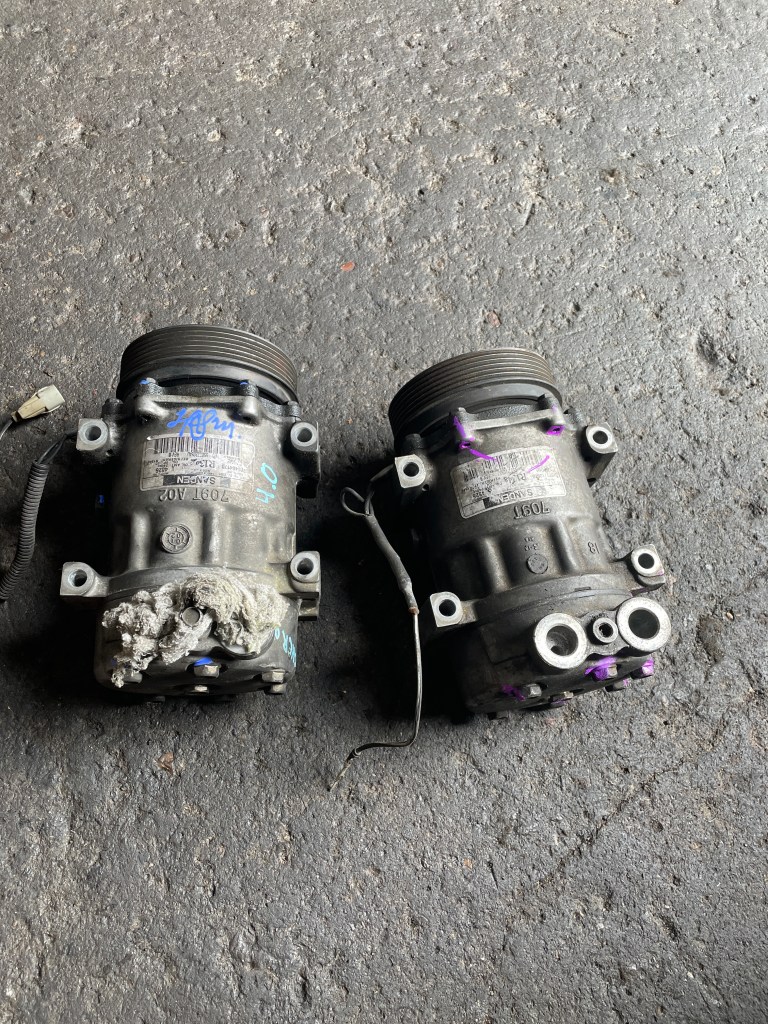
I picked the one with the blue markings.
Unfortunately, after having installed and tested it turns out that it had a leak somewhere… should have picked the violet markings…So car part store again…
Just on a side note, the car part store and the mechanic are in different parts of the city. Traffic is a bitch here so it was a lot of back and forth today.
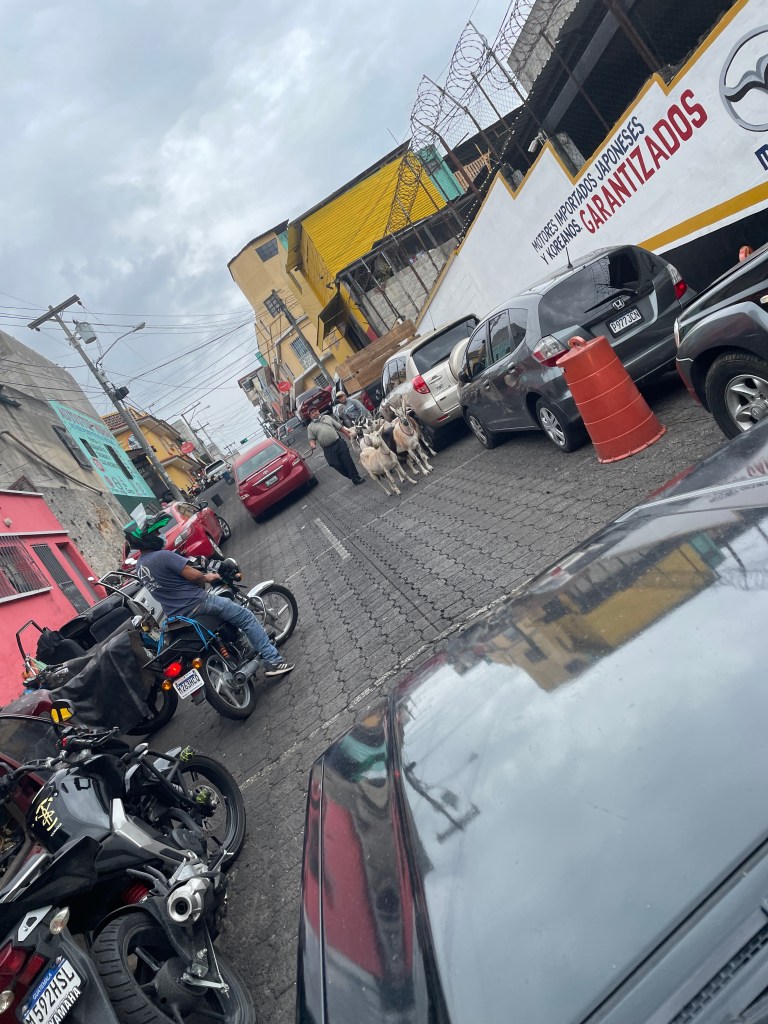
I had some time for research while they where working on Jim and i also went for further exploration walks. And crossed a couple of rather unpleasant neighborhoods..
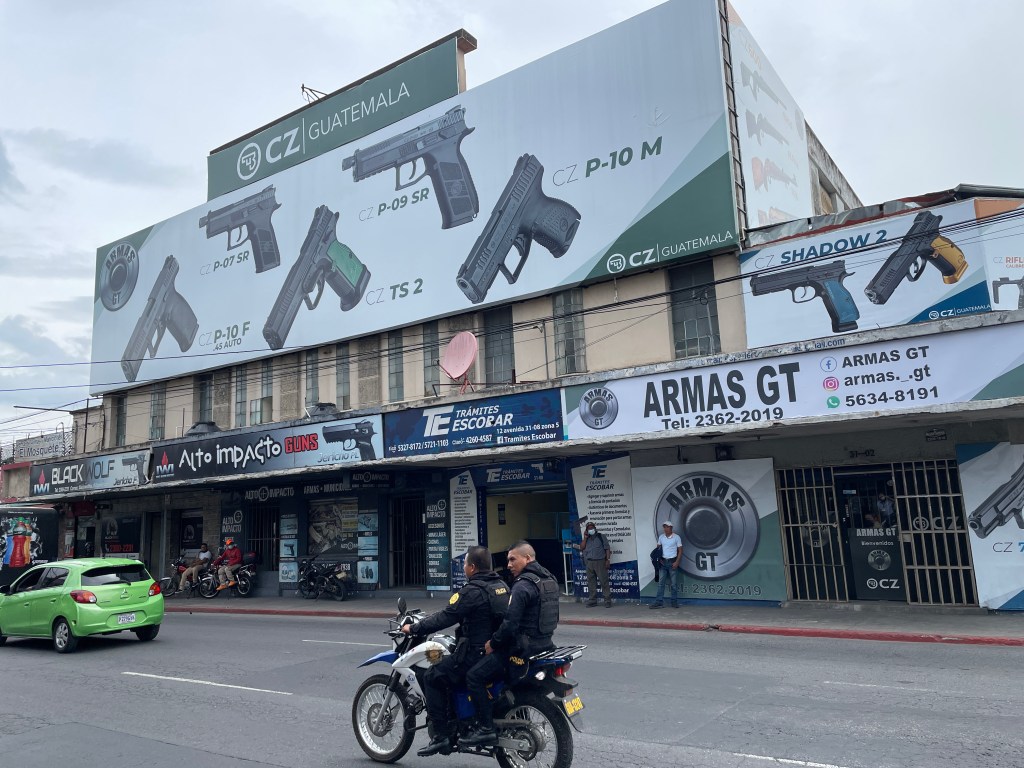
You see a lot of guns here. Many shops or delivery trucks are guarded by armed men and that gives you an idea how how rough some parts of the city actually are.
In Central America, 73 percent of homicides occur at the end of a gun, compared to a worldwide average of 41 percent. In Guatemala, this number was 75 percent in 2015, according to INACIF data. The widespread availability of firearms in Central America was also covered in the World Bank study, which showed Guatemala as having the highest number of guns per capita in the region.
I will spare you the other statistics because they are seriously frightening and after having read them myself, let me just say i refrained from walking and started talking taxis trough those areas.
But it should also be said that everybody we have met so far, everybody, whether the mecanico, the ladys at the market, the car part guys or the Palo Santo gifting Shuco pusher made us feel more then welcome and safe. You are greeted with smiles and good vibes. It is really hard to imagine these crime rates unless,of course, you actually are directly confronted.
Anyways, new compressor in the bag it was back to the boys.
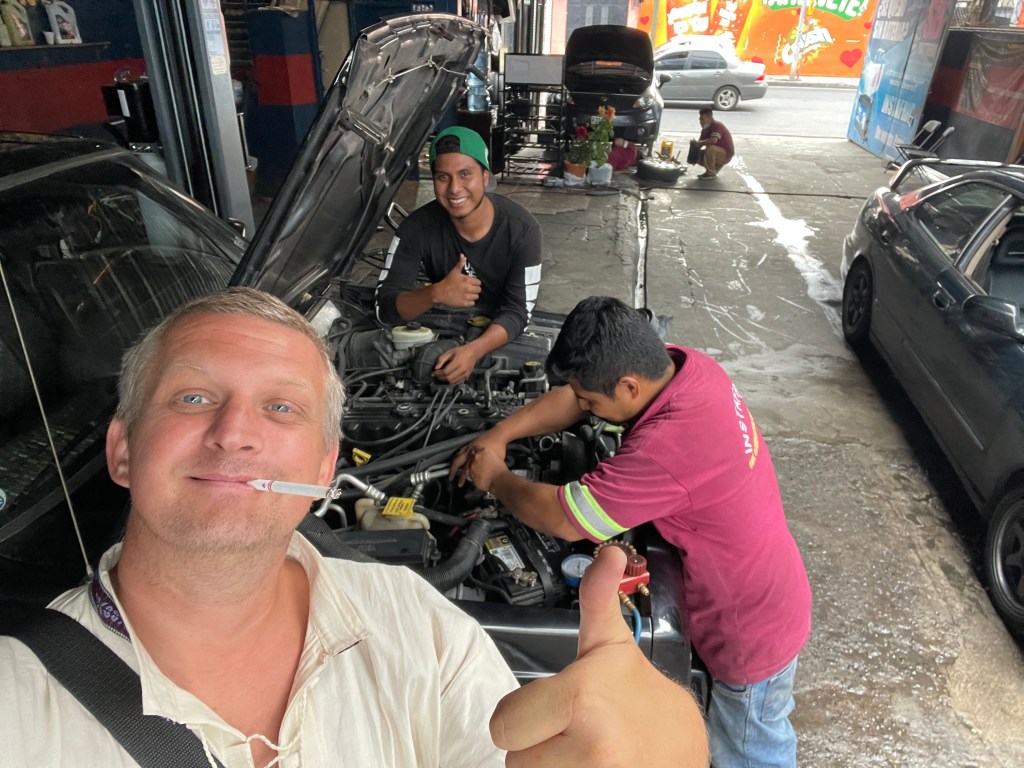
This compressor worked!!! Unfortunately while testing we realized that the old faulty one blew a cable or some part that the guys did not have at hand so the air is not being guided as should be .
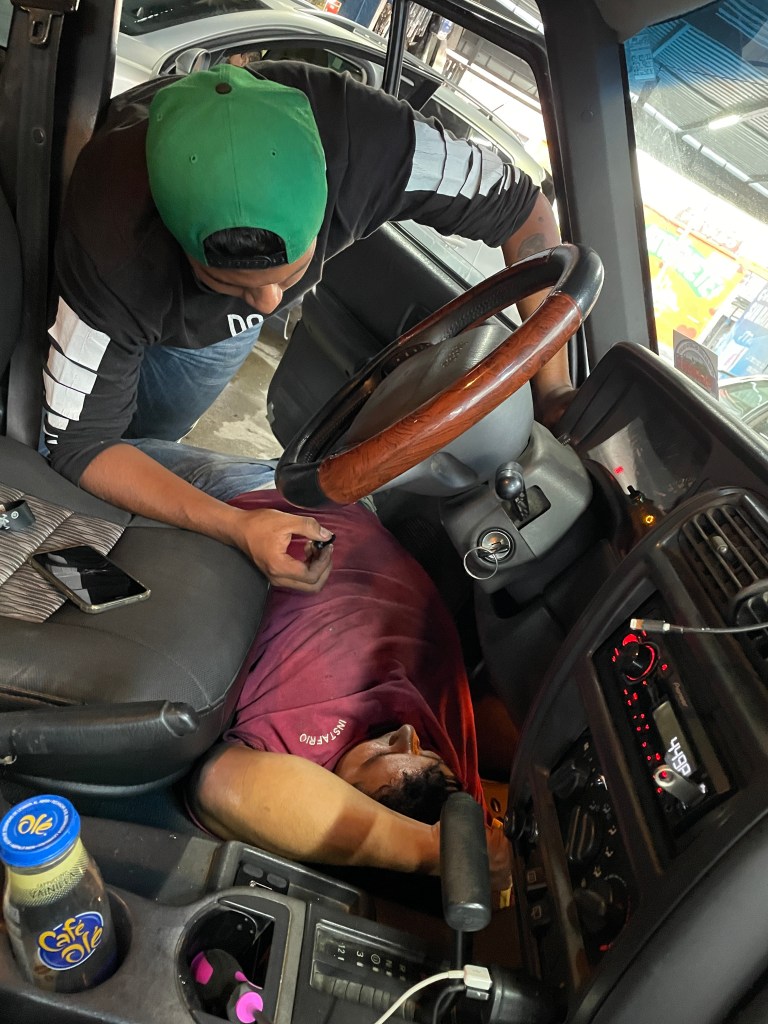
Ill be back tomorrow at 8am to install the missing parts, get the silicone fixed and then hopefully back to the road. I mean it is nice and all but it is a city and knowing that Antigua, Lake Atitlán and the volcanoes are around the corner makes the butt itch a little..
Just having been to Tel Aviv for my stag with the bwoyz, SHOUT OUTS TO THE WHOLE GANG, i had to find out why the Stars of David and why the Isreal flags are everywhere.
I mean the first and obvious connection is that apart from everybody else even most of the indigenous people are Christians now. And since Jerusalem is in Israel, ok. But further research showed a much stronger relationship between the countries:
This may not be interesting for all but i was completely surprised and intrigued because it is not only : “our soldiers were trained by Israelis” It also reads well and that is why i posted it. Makes sense now.
I have this from an article written by : Irin Carmon in February 21, 2012 . She is a senior correspondent at New York magazine and co-author of The Life and Times of Ruth Bader Ginsburg.
Jorge Garcia Granados, the Guatemalan Ambassador to the United Nations, was a member of the U.N. Special Committee on Palestine who helped lobby votes on behalf of a Jewish state, and Guatemala was among the first countries to recognize Israel. Granados became the first Guatemalan ambassador to Israel, where streets are named after him. (When his grandson was kidnapped by guerrillas in the late 1970s, the family asked Israel for help. Not long ago, his granddaughter was living in Herzliya and overseeing mining concerns in the Negev, though that ended badly.)
Early on, this relationship was predicated on a broader understanding of Israel as being born out of a liberation struggle against the imperial British; Guatemala is not only a former Spanish colony but also still resents a British-imposed border with Belize. Granados remarked of his 1947 visit that there were “many sociological and political analogies between Palestine and Guatemala, in spite of being remote from each other.” By 1955, Guatemala was the first country to move its embassy to Jerusalem, though it’s since moved to Tel Aviv. (Years later, President Ramiro de León Carpio’s plans to return the embassy to Jerusalem—citing “the sentimental and intimate relationship” between the countries—were stymied by cardamom farmers, who in turn feared a boycott from their major market, Arab countries.)
But there’s a darker side to the friendship, particularly during the bloody chapter of Guatemala’s civil war. When human-rights abuses led the Carter Administration to cease military aid to Guatemala in 1977, Israel filled the vacuum. By 1983, the New York Times was reporting that Israel was not only acting as a surrogate for the United States (in a similar fashion to its actions in Nicaragua) but also working to oppose the Soviet Union and grow the market for Israeli arms. The cooperation didn’t just involve UZIs and hand grenades; it also included providing intelligence and operational training, both in Israel and in Guatemala, to the right-wing government.
“The Israeli soldier is the model for our soldiers,” proclaimed the chief of staff of the Guatemalan army announced. In 1982, Efraín Ríos Montt—the country’s first evangelical president and a general whose military regime was installed by a coup—told ABC News that his success was due to the fact that “our soldiers were trained by Israelis.”
Ríos Montt was finally indicted on charges of crimes against humanity and genocide, after decades of efforts by human-rights activists who cited massacres, torture, and rape against indigenous people accused of supporting the guerrillas. A United Nations truth commission also called it genocide, finding that the many Mayans among the 200,000 people killed in that era were targeted by the state.
There wasn’t much outcry in Israel at the time, though much of these activities weren’t secret. Yossi Sarid protested on the floor of the Knesset that the country had “abandoned the green route of agriculture for the red and bloody route of arms,” according to a 1985 Mother Jones article on the export of “bithonism”—the high church of Israeli security—to Latin America. Likud member Yigal Hurwitz replied, “Your speeches, Yossi, are not saleable on the foreign market; weaponry we can sell.” Indeed, as even Sarid conceded to the magazine’s Victor Perera: “You have to understand: survival too is an ethical issue.”
Whatever diplomatic points were scored with the regime, the Israeli link wasn’t lost on the average Guatemalan. At a cemetery in Chichicastenango, relatives of a man killed by the military told Perera, “In church they tell us that divine justice is on the side of the poor; but the fact of the matter is, it is the military who get the Israeli guns.”
Ríos Montt’s indictment is not the only indication that this isn’t ancient history in latter-day Guatemala.The country just elected its first military president since its civil war ended, Otto Pérez Molina, who was a commander during the Ríos Montt regime. Pérez Molina’s win was widely seen as a vote for remilitarization in response to persistent violent crime and impunity, these days mostly perpetrated by gangs and narcotraffickers. By the time I arrived in Guatemala, only weeks into the Pérez Molina regime, the military was back on the streets performing security functions that had once been the domain of civil police, to the great concern of human rights defenders. It doesn’t take a tremendous leap to imagine how those warm Israeli relations are already coming in handy. Meanwhile, last month, Guatemala took a spot on the United Nations Security Council and is considered a reliable vote against Palestinian bids for recognition there, also due to its currying of U.S. influence in an attempt to get that military aid restored. Friendship has its benefits.


 El viaje
Leave a reply to Lala Cancel reply