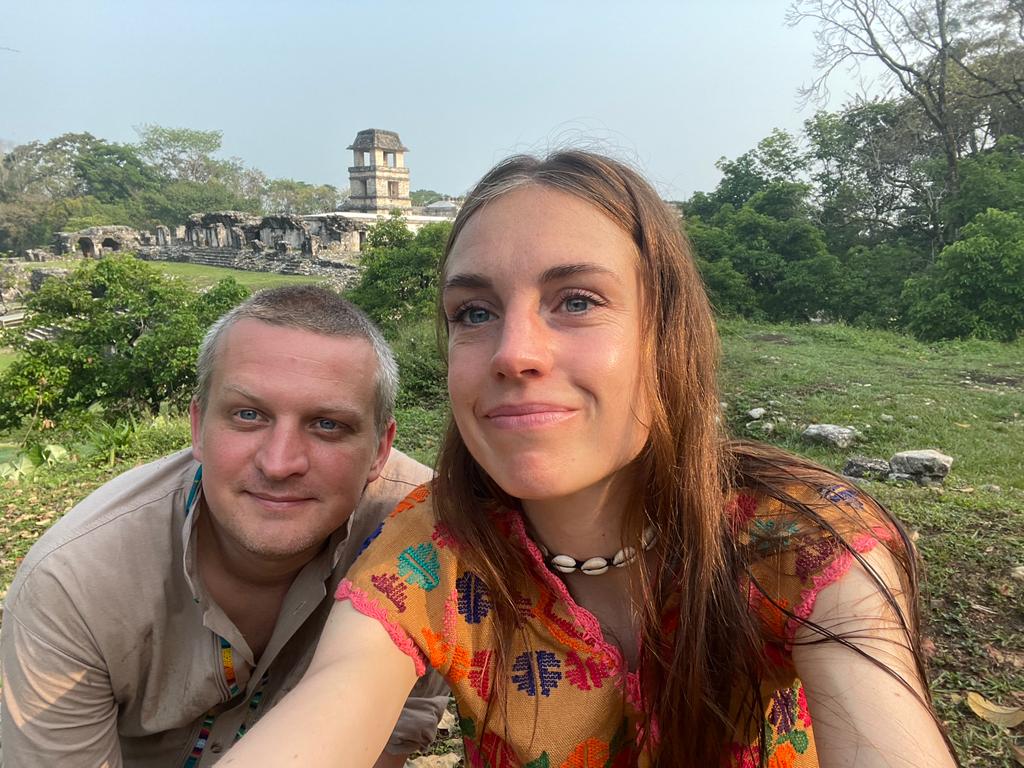
Bogotá surprised us mainly by being way more modern and progressive than expected. You should not but could, if you had to, compare it to Mexico city. When getting to know these cities it is really hard to remember that you are still in a third world country where the majority of the people live in extremely poor conditions. Bogotá is a vibrant hub of new and old businesses, very rich communities , shops and restaurants. You obviously have very poor communities or neighborhoods too but as a tourist you do not really go there for very obvious reasons. So what remains is the modern.
We did have a small whiff of that in Medellín but Mexico City having been at the beginning of the trip, Bogotá was a welcome refreshment.
Having said that, the amount of fusion restaurants and brunch places filled with robotic mac users armed with headsets and fancy clothes was too much for me. So i dove back into history.
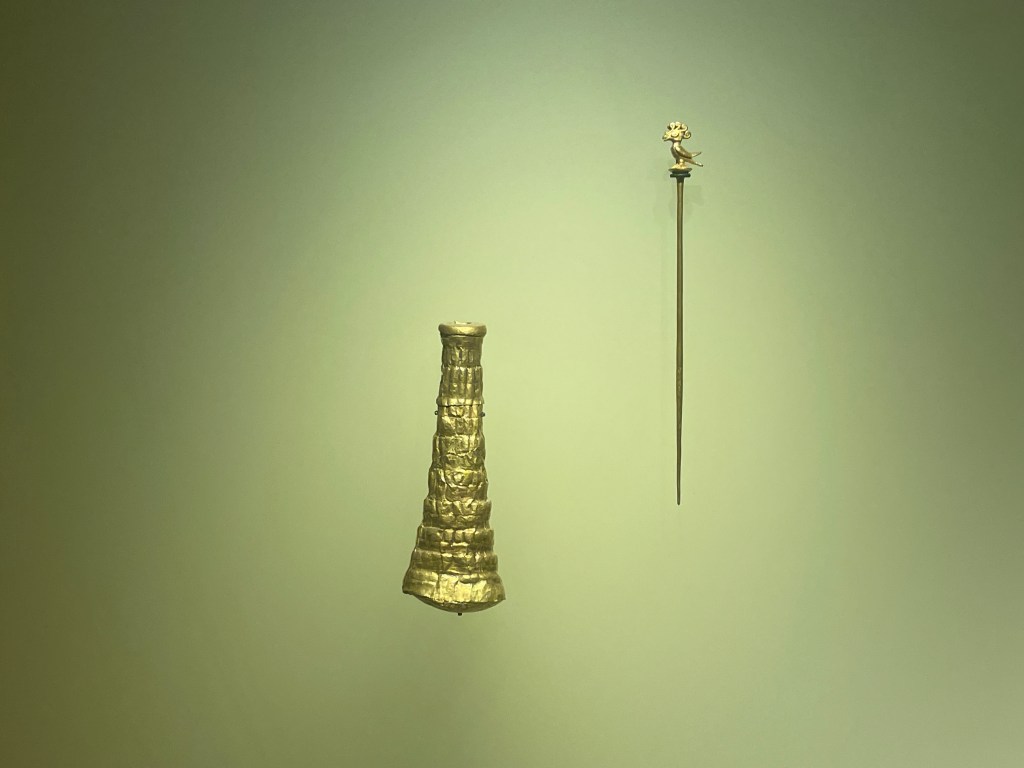
The gold museum is an excellent place for that.
20,000 years ago, America was inhabited by hunters and gatherers who had come from the Old World. After settling in this territory, with the passing of time they
came to develop agriculture and to live in villages and towns.
Metallurgy, which was discovered 4,000 years ago in Peru and Ecuador, spread to the south coast of Colombia. Metalwork flourished in the Andean area and along
the coasts from 500 B.C. to the time of the Spanish Conquest. Thousands of objects were made from various metals, and in more than a dozen styles. Metalwork was common amongst societies that had permanent political and religious
leaders who governed groups of villages. Although they were not states, each chieftainship fed its large population by virtue of an efficient agricultural system based on the growing of corn and cassava, coupled to the abundant results of hunting
and fishing activities. Because there were food surpluses, some people were able to engage in specialised activities like mining and goldwork
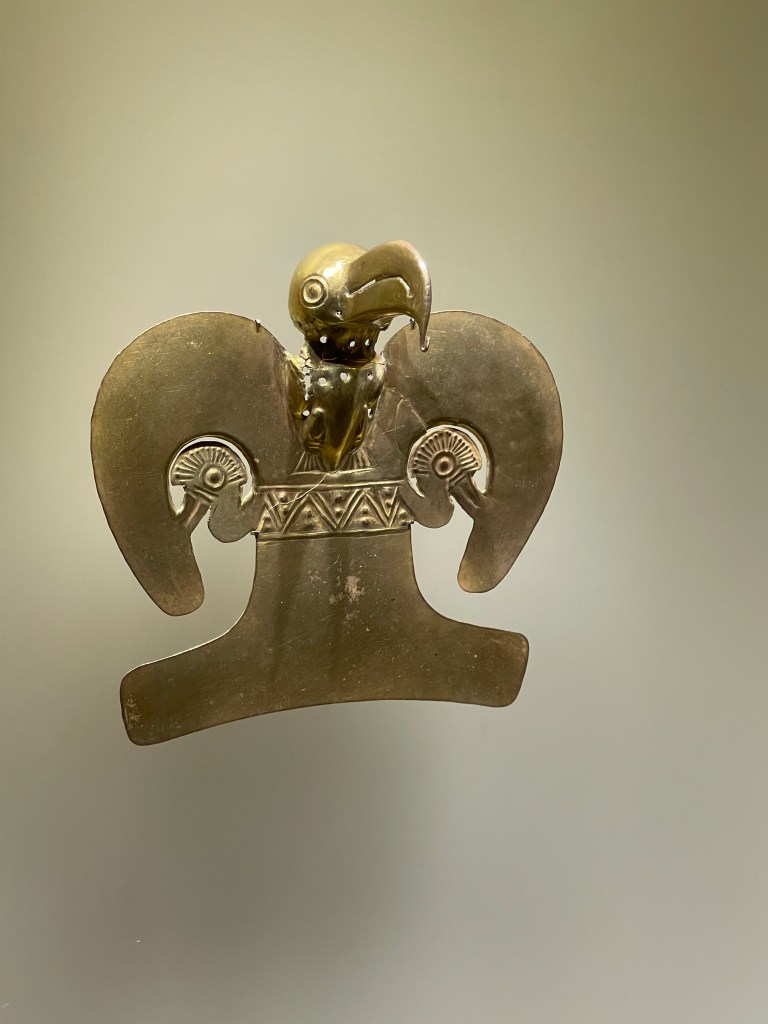
Metallurgical production existed to serve the rulingelites, who used it to reenforce their prestige and as a visible sign of their authority. These sacred, symbolic objects expressed
a compley philosophy relating to the origin of the world and of mankind, one which explained the evolution of the universe and justified social and natural relationships.
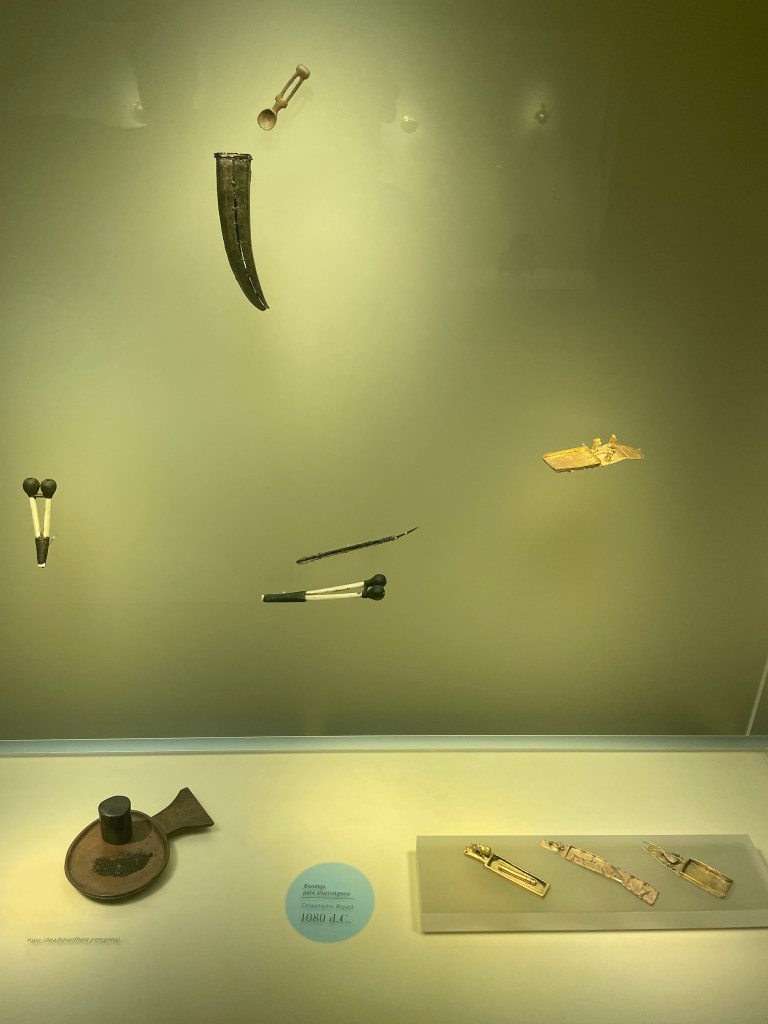
Ordinary people used numerous simple ornaments Metals were also used for making ools and offerings.
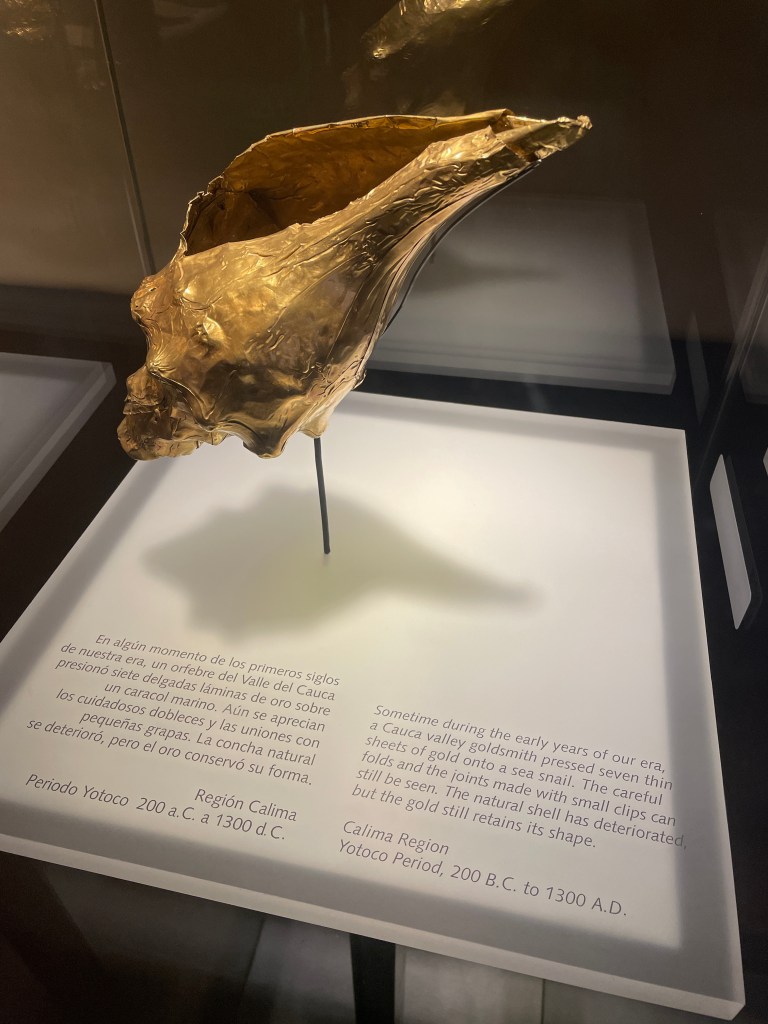
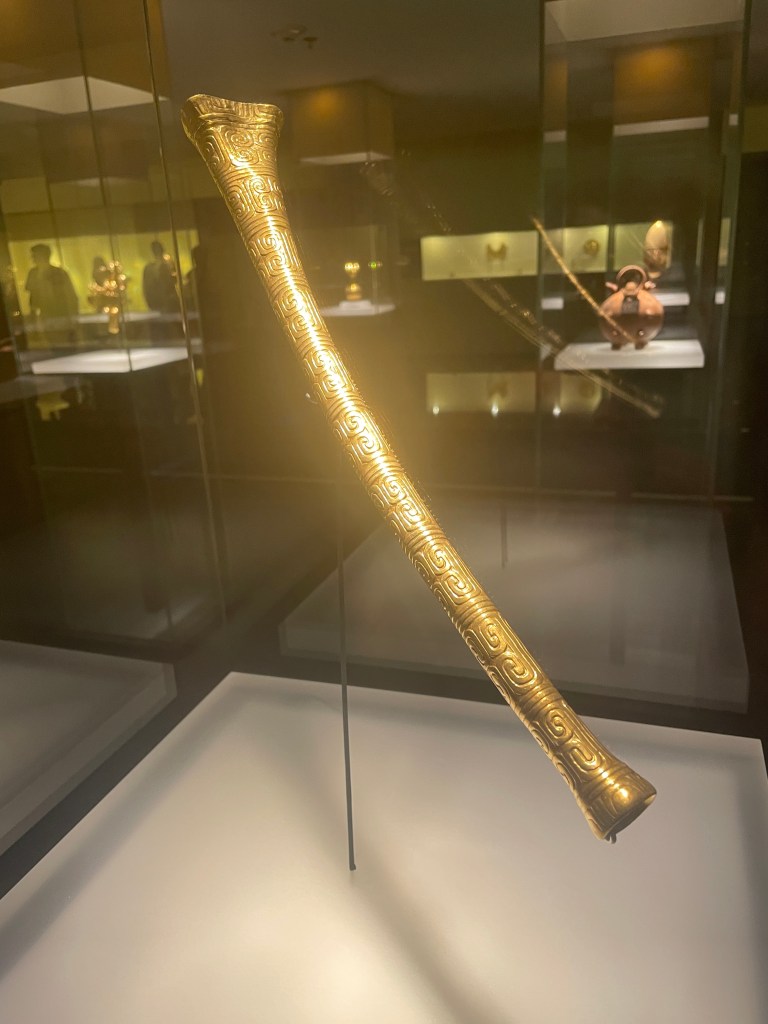
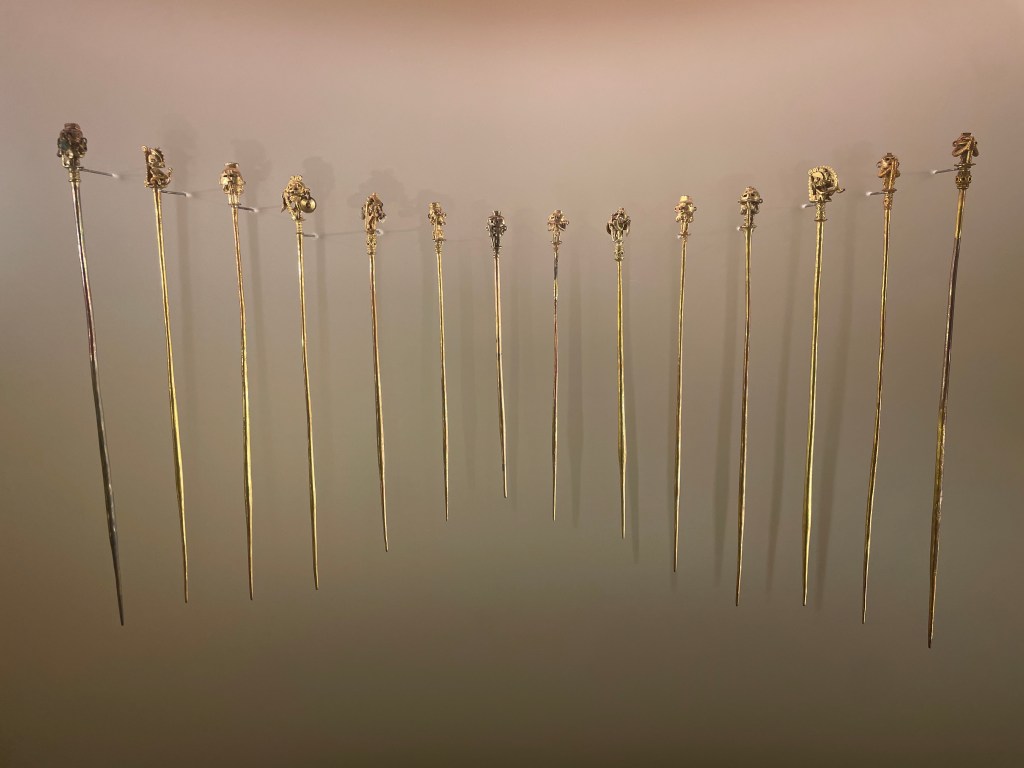
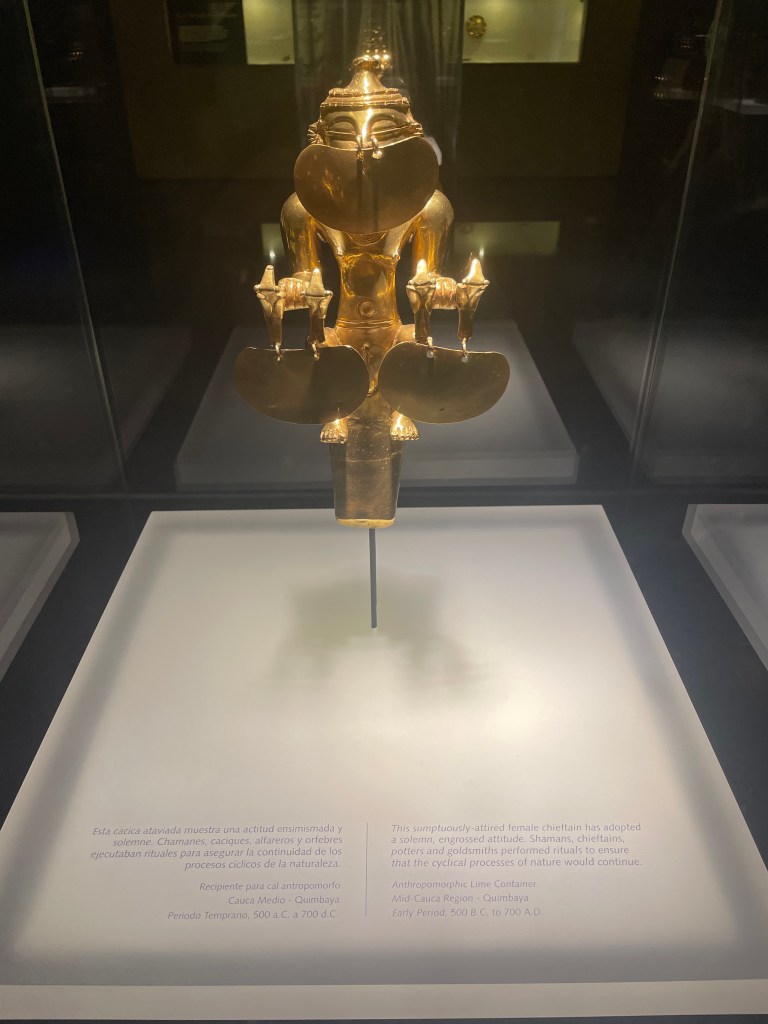
Pre-Hispanic goldworking societies developed special ways of understanding the world. With these, they gave order to their surroundings and filled them with symbolic content. These cosmologies answered problems that were central to their existence, such as death, illness, and the meaning of life. Imbued with a profound religious sense, they converted the universe, society and its creations into sacred realities, while establishing a link between man and his ancestors that was
essential to the continuity of the traditions. Metals, particularly
gold, symbolised the fertilising powers of the sun and expressed
the divine origin of the power held by the rulers. Chieftains, priests and shamans had the responsibility
of guarding, transmitting and renewing cosmological
representations. Endowed with special sensitivities and skills, they were subjected from childhood to lengthy learning processes about mythology, sacred plants, astronom,
and ritual practices. With their words, gestures and objects
as tools, they did a symbolic job, one which transformed the world in order to guarantee not only the wellbeing of society but also that nature would reproduce herself. Alongside them, the technical and at the same time magical work
of the goldsmiths transformed metals into objects that had cultural meanings.
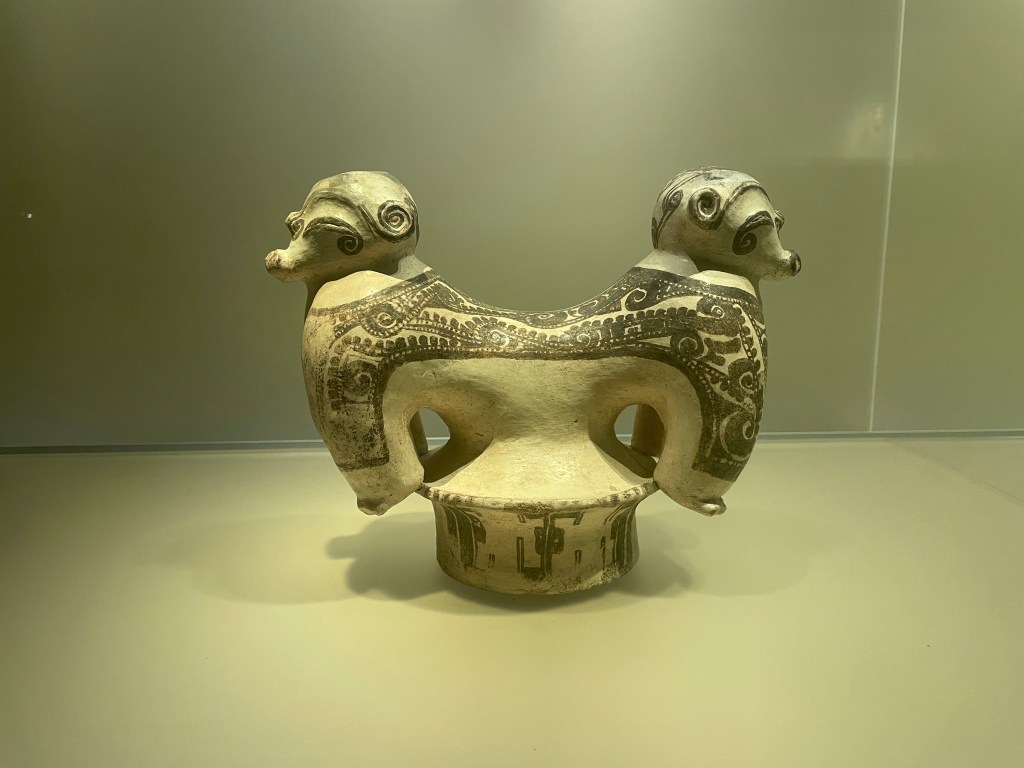
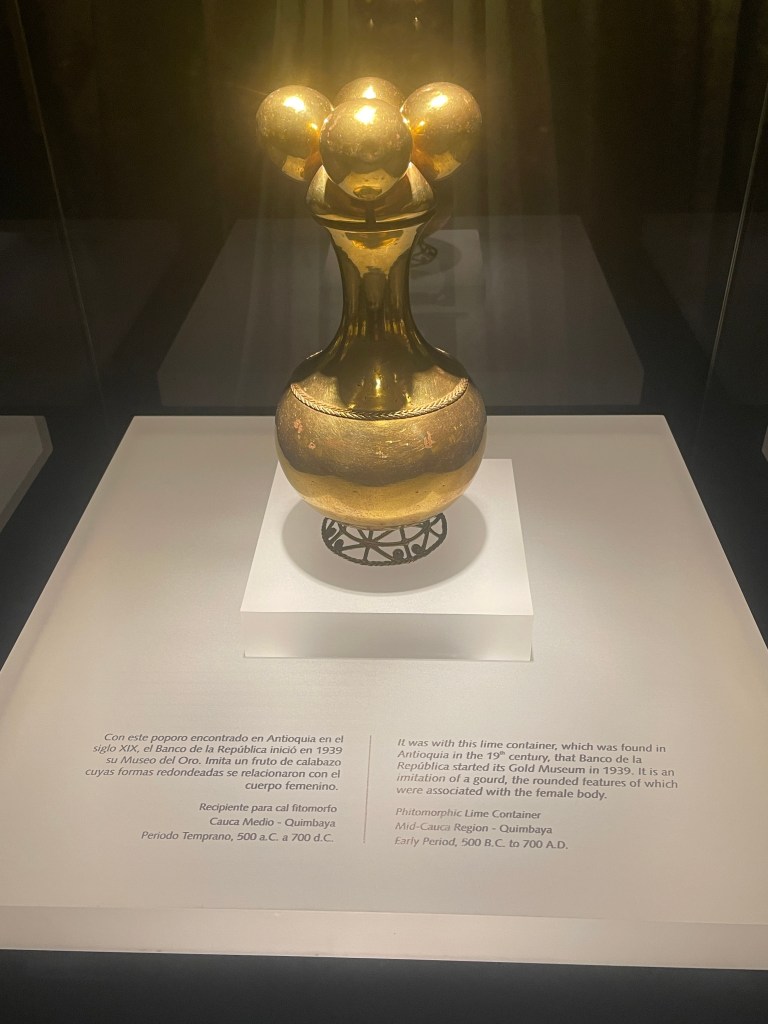
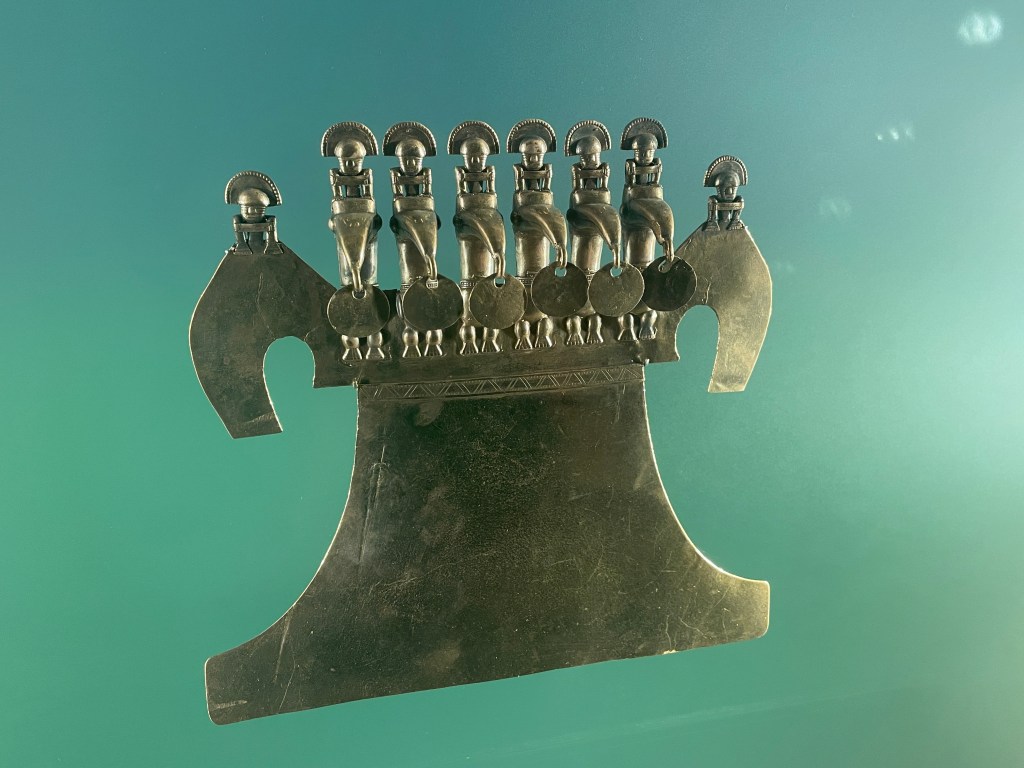

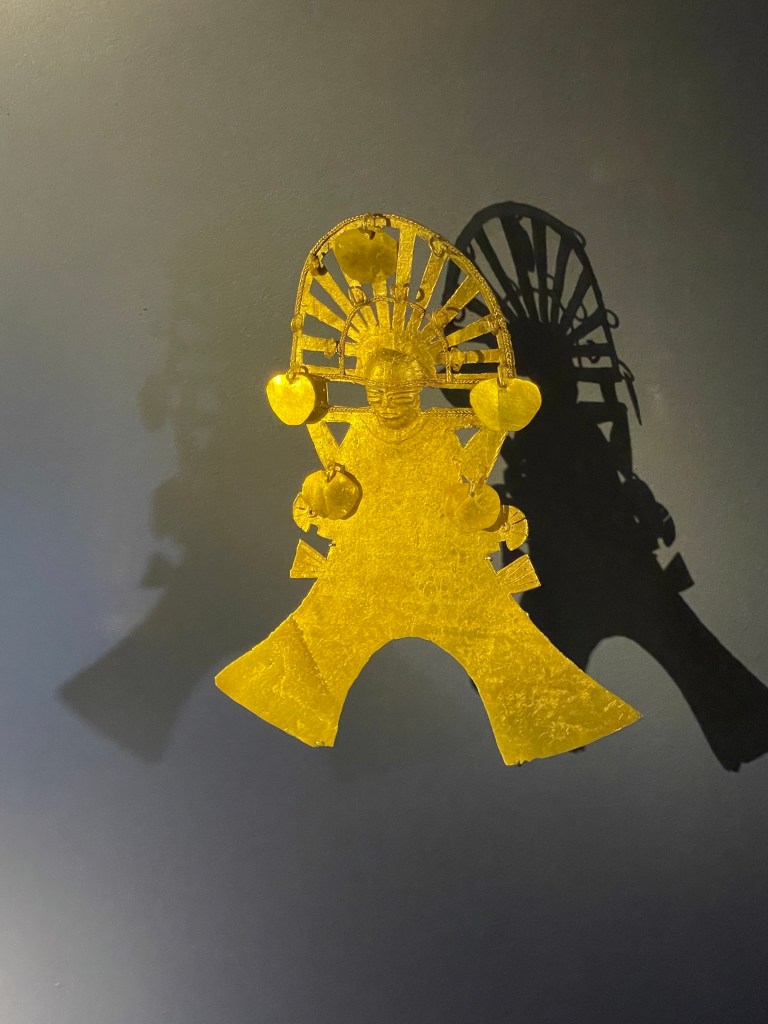
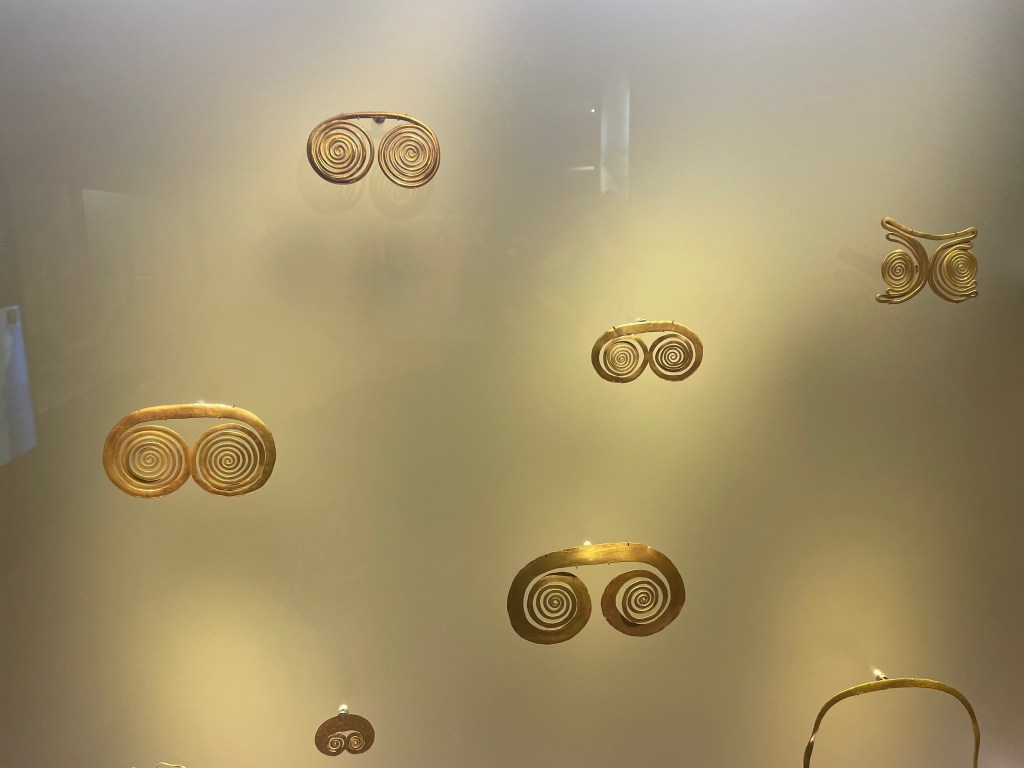
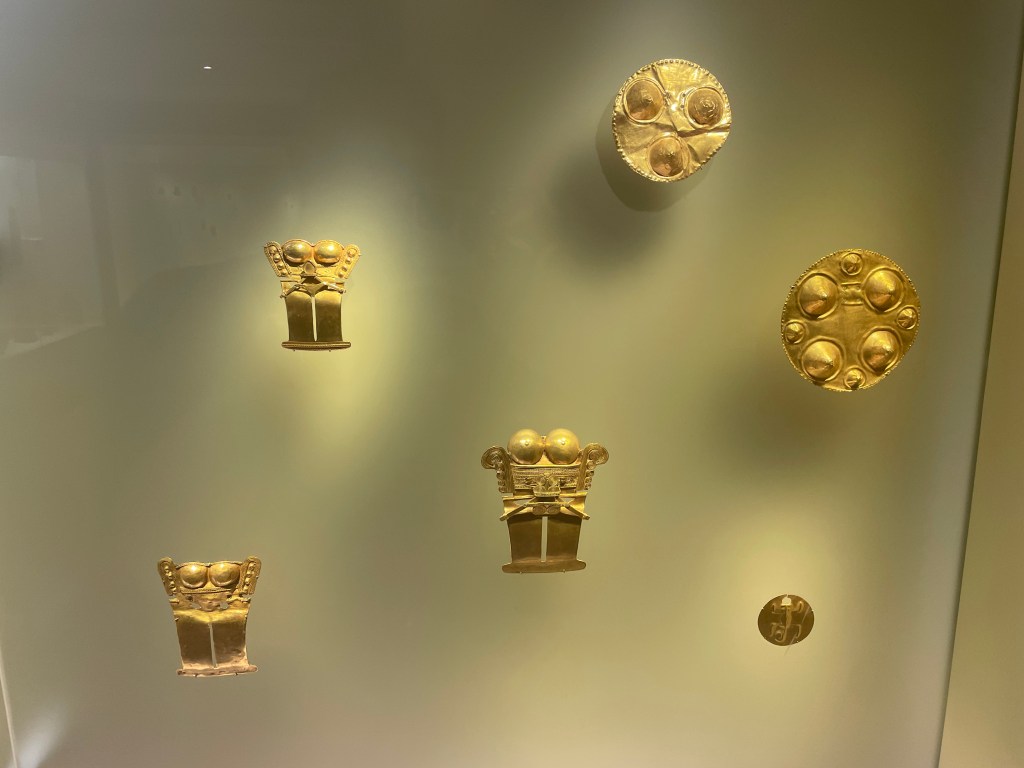
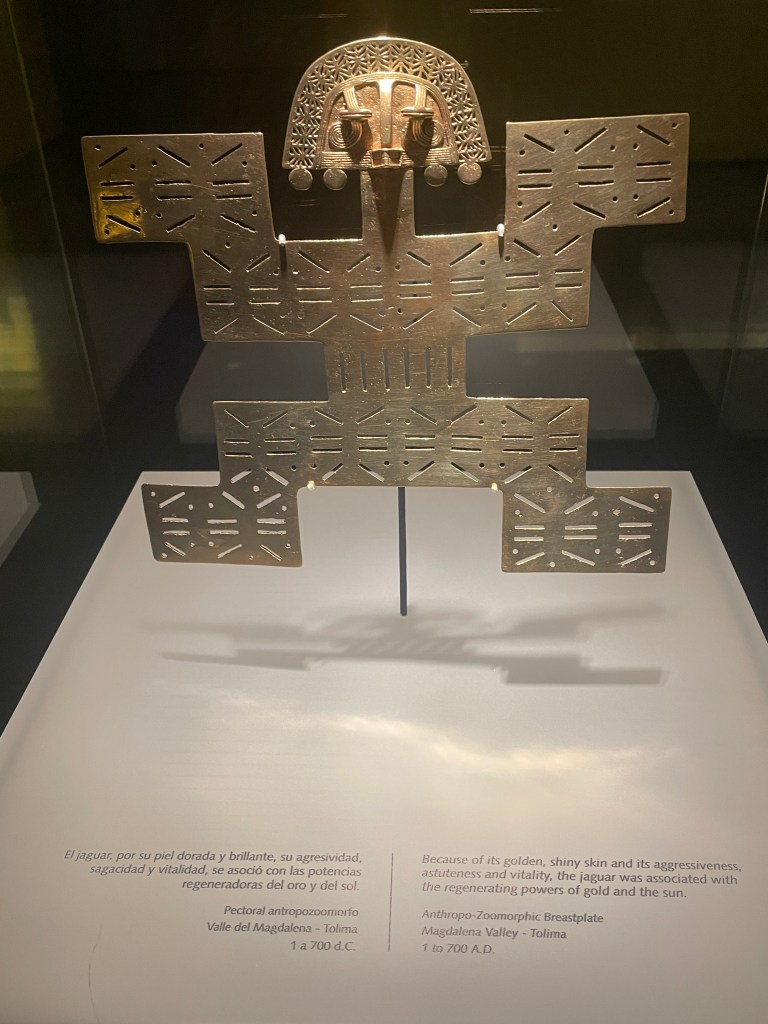
A rich and abundant symbolism of taboos, objects and ideas surrounded the chieftains and other dignitaries They were viewed as descendants of divinities, and were considered to be related to powertul beings like the jaguar. Looking them
in the lace was forbidden, and their feet were not allowed to touch the ground, they had various wives, servants, and large homes surrounded by palisades: they were always borne aloft on poles, and they were the only ones who could wear certain pinaments or eat certain foods. When they died, they were mummified and placed in large tombs or in their enclosures, which henceforth became sanctuaries.
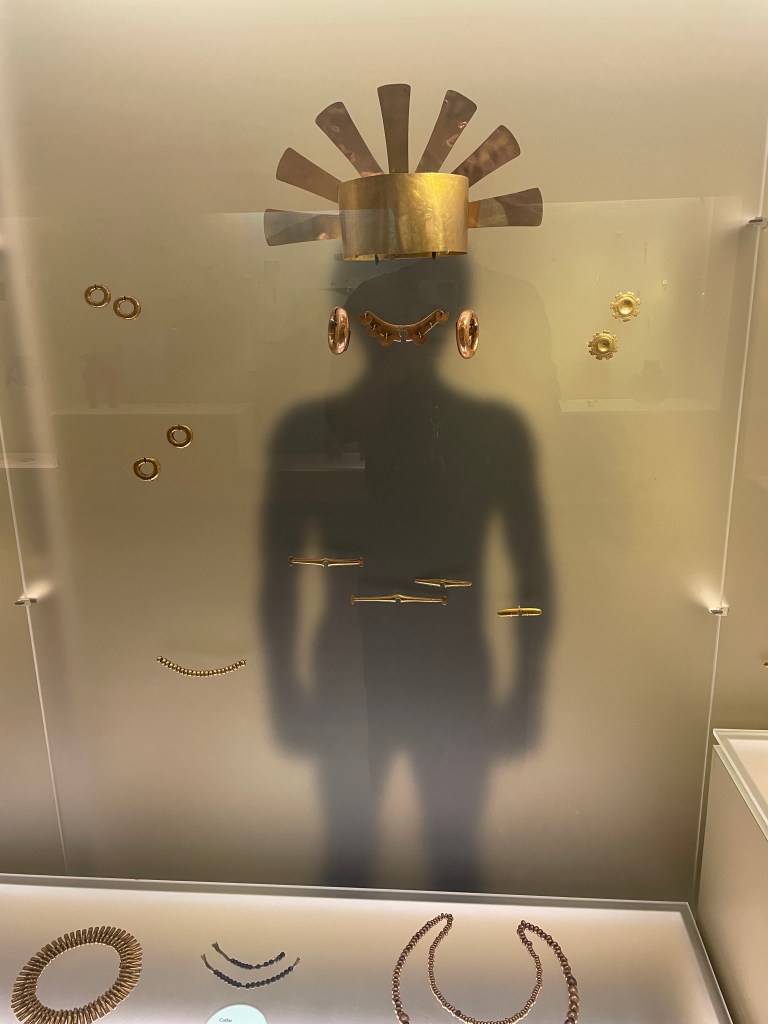
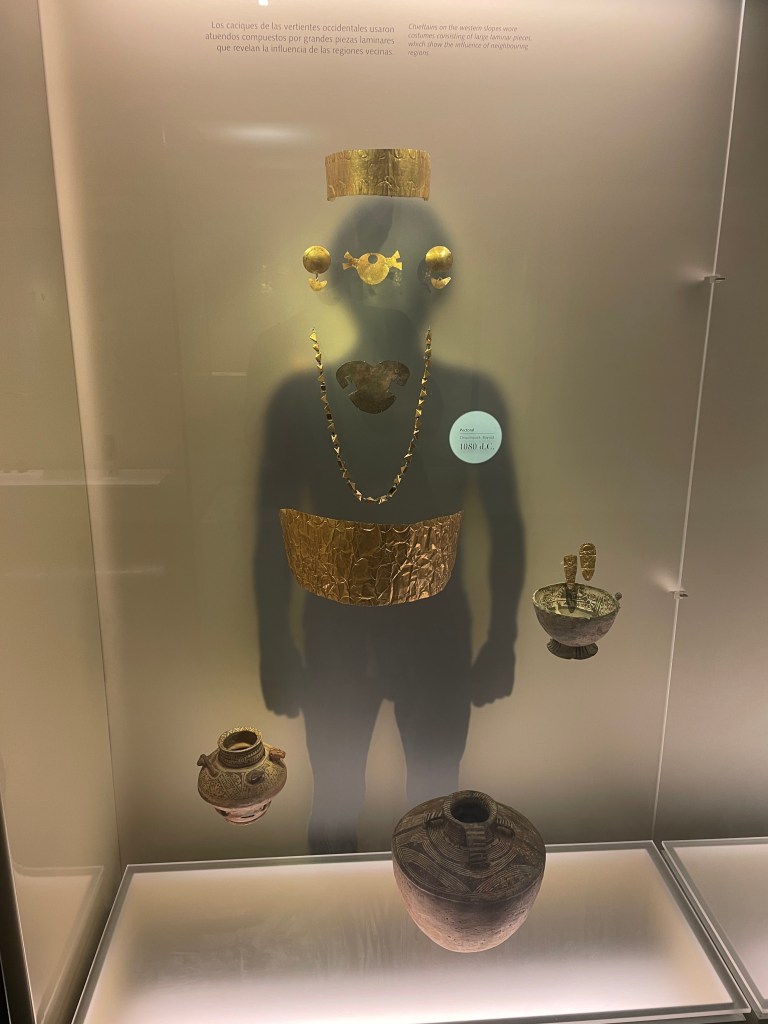
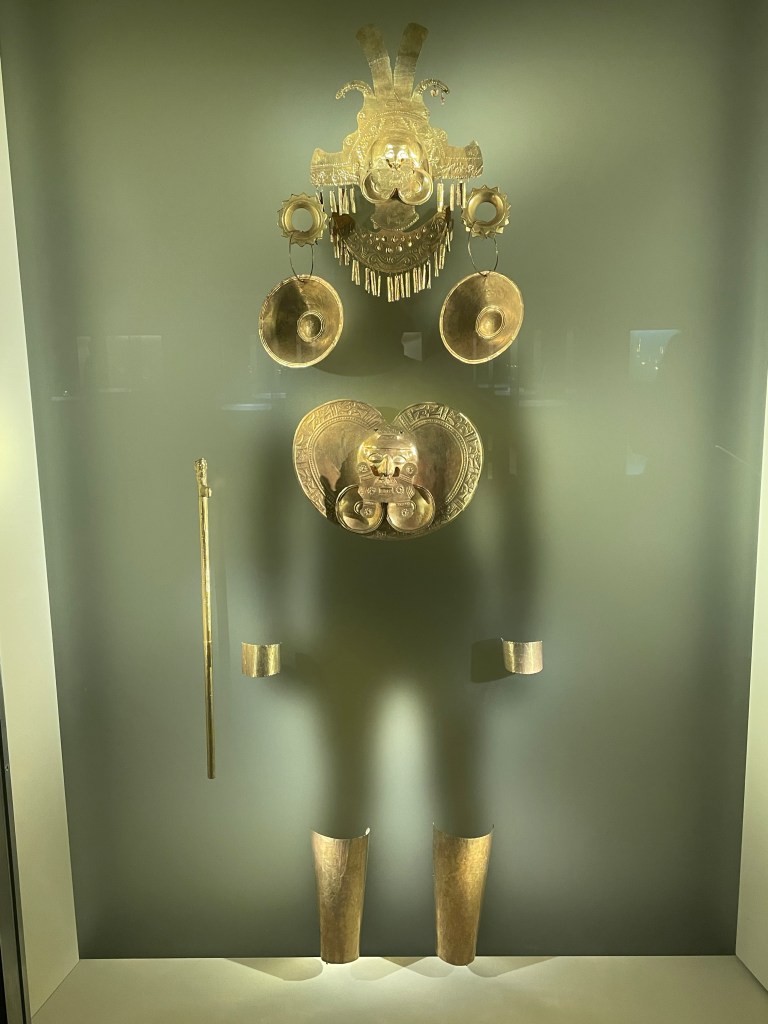
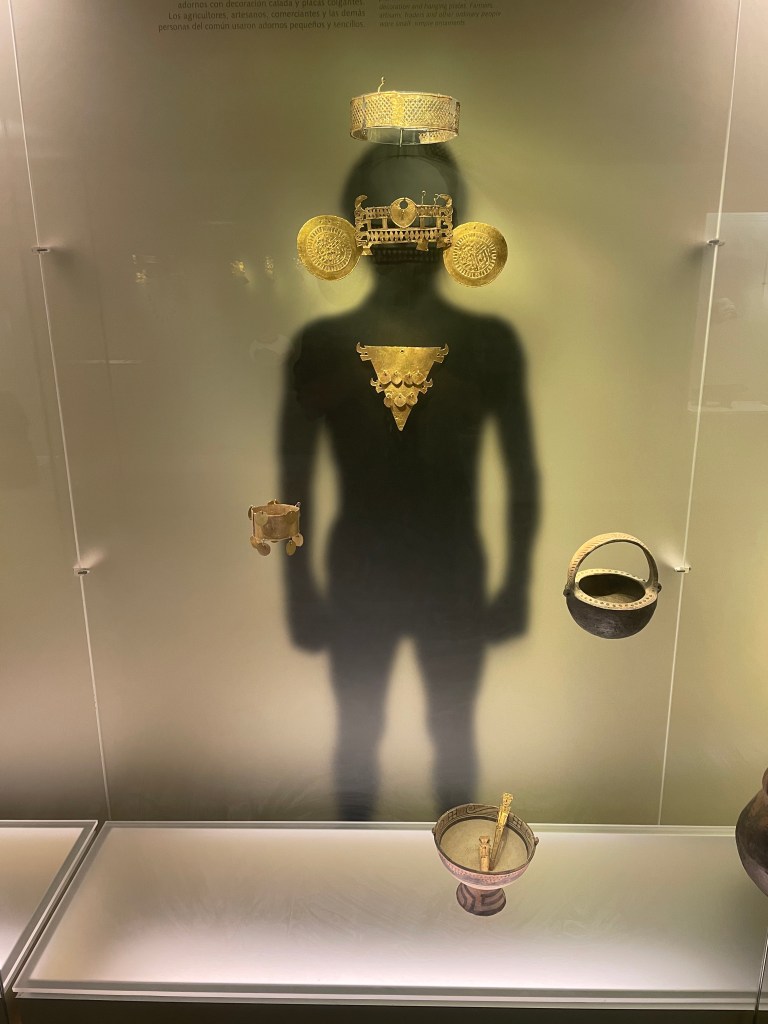
Stories of the origin of the universe and of the culture in the remote past were told in myths. These explained the genesis of the world, the stars, people and animals, and how the different social groups had obtained their land, tools, musical instruments
and marriage rules. Rituals recreated this mythology. Dancers, with their masks and sumptuous attire, transformed into the creators
or ancestors, and they revived heroic exploits of ancient times during the dances, bringing the primordial past into the present.
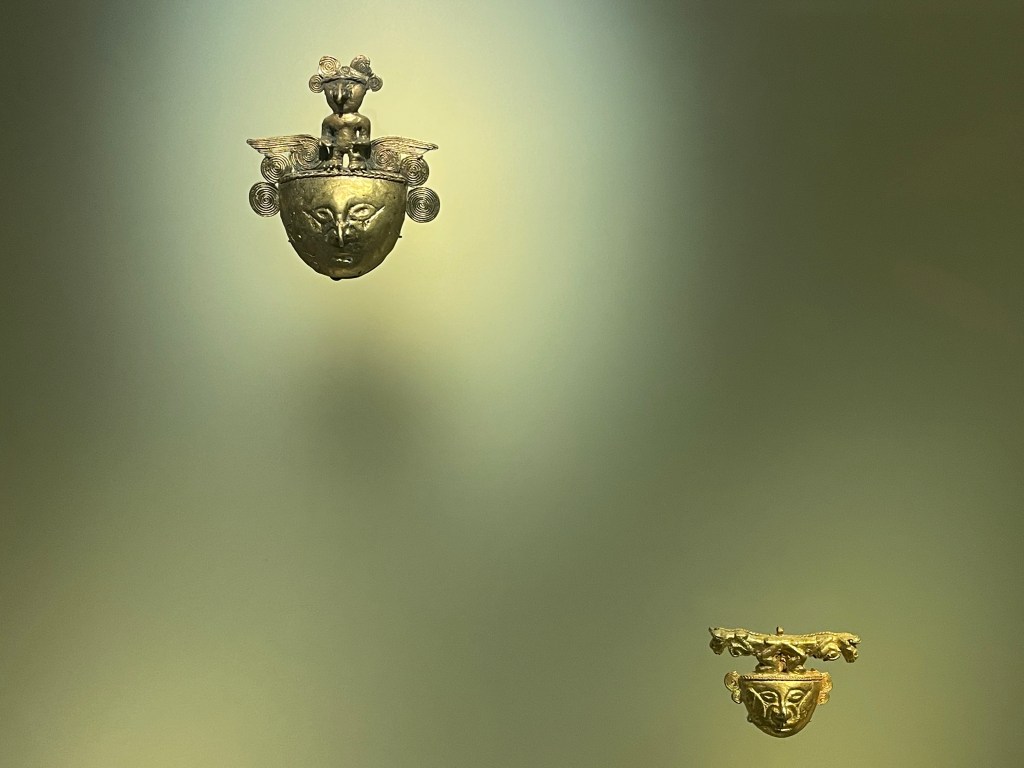
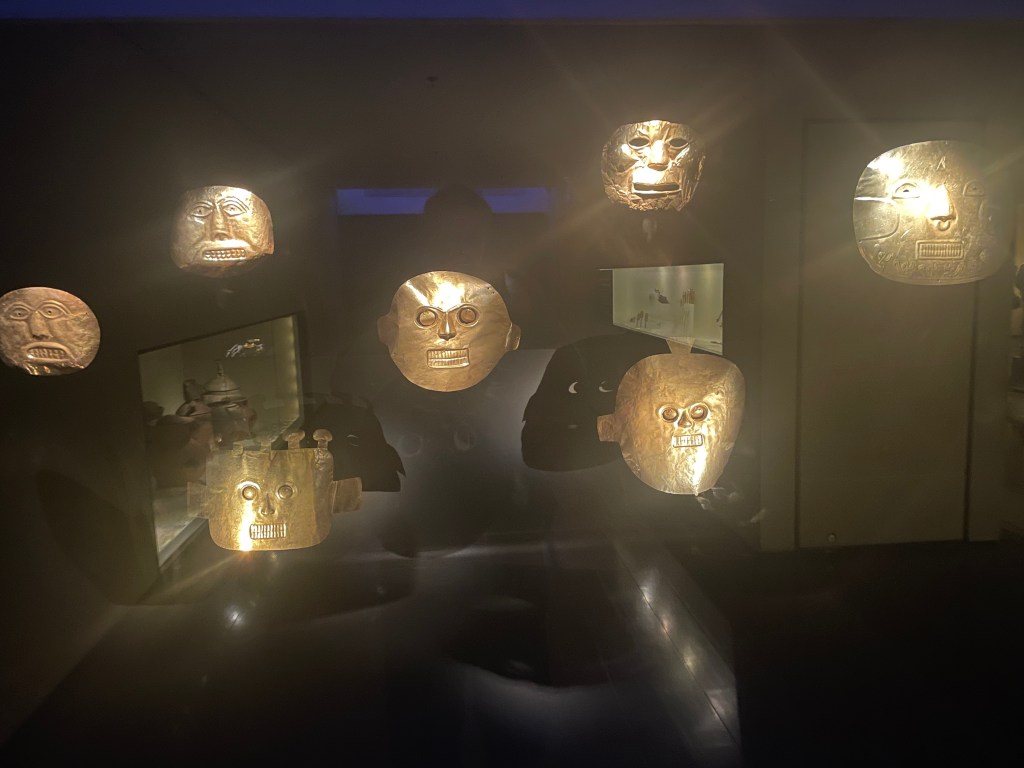
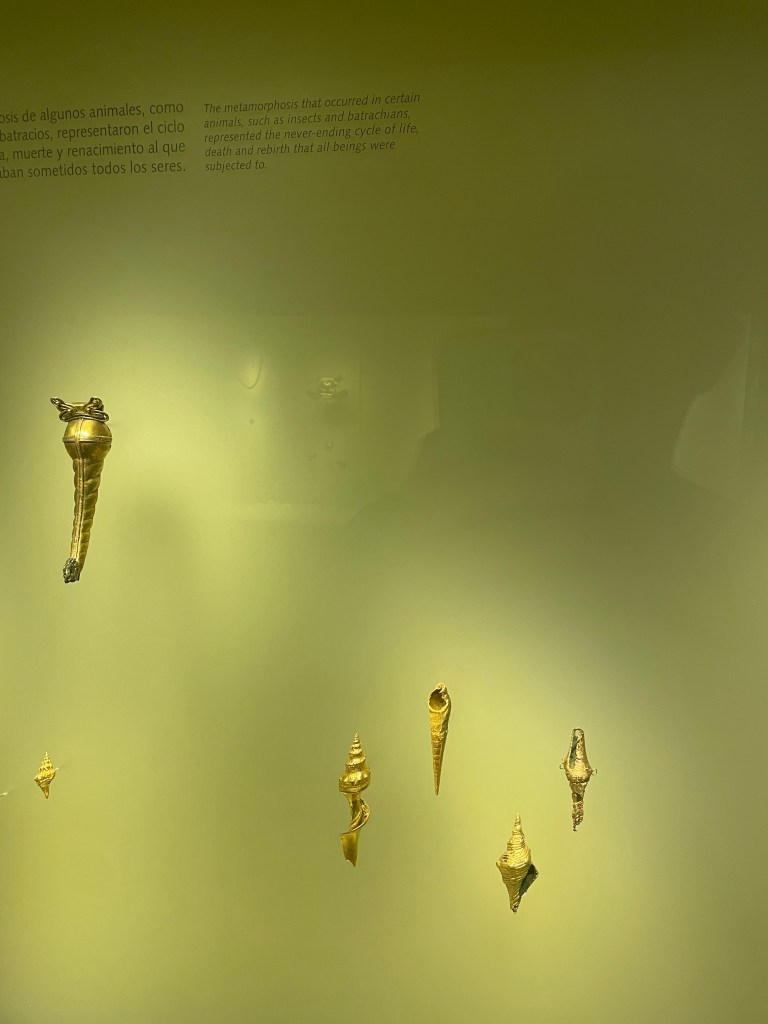
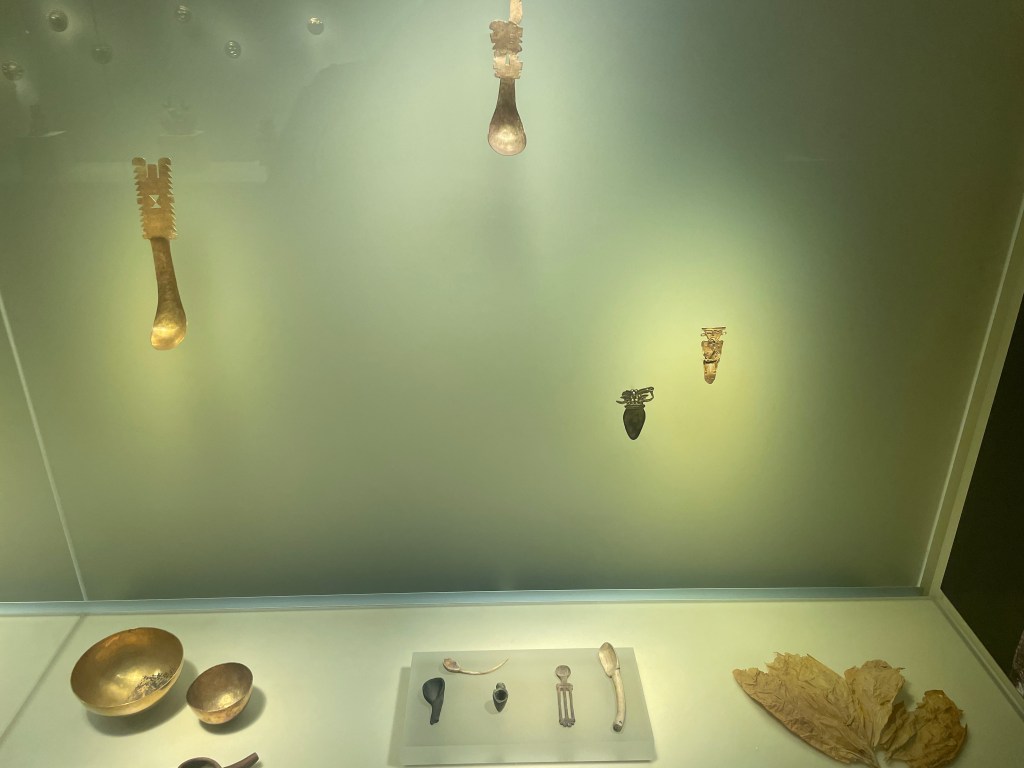
Pre-Hispanic societies handled a vast range of plants, some of which had important religious uses. Shamans used sacred plants like tobacco, coca, yagé, yopo and many more to help immerse themselves in the spiritual dimension of reality and visit other levels of the cosmos. Consuming these plants, coupled to fasting, sound and light effects and repeated body movements, induced a state of trance that taught the secrets and powers of the universe and in which the invisible was made visible.
There is no radical difference in many Amerindian cosmic visions between humans and non-humans. Persons, animals, plants, rocks
and objects are people, albeit different types of people, and all of them have a soul or spirit. Tapir-people, fish-people and the rest
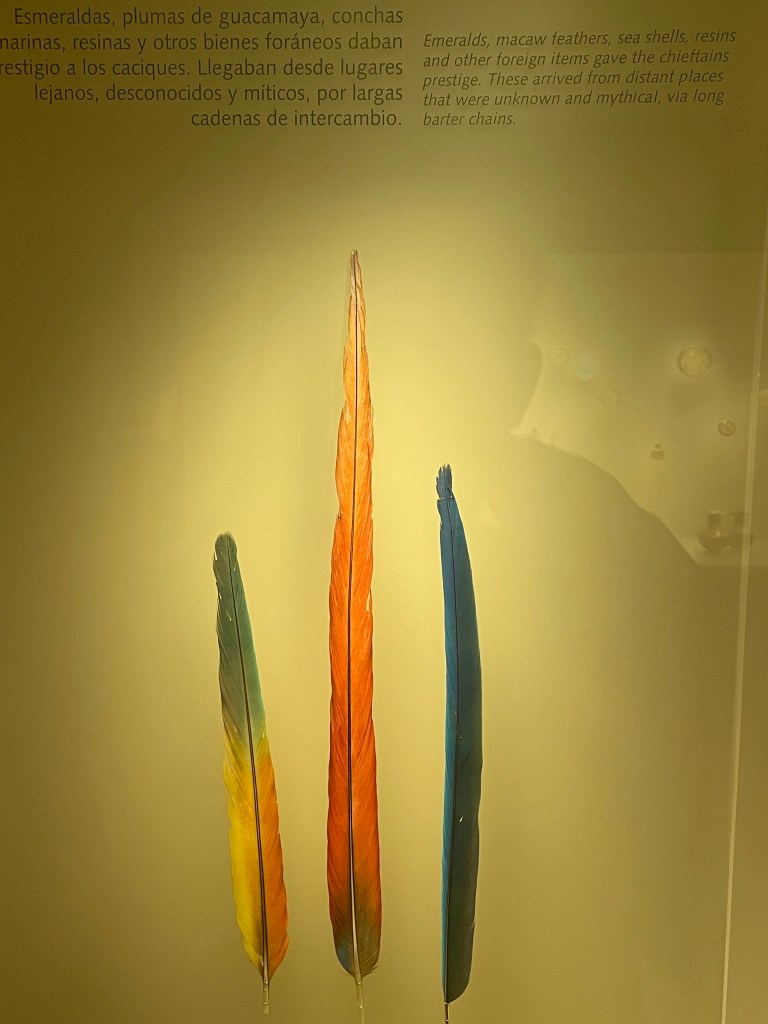
all live in communities, harvest, have their homes, and dance like men. Each people type has a particular way of viewing the world, its own perspective, which is determined by its body, a body-apparel that can be removed and changed at will. Putting on feathers or ornaments or painting the body means changing the body-apparel and transforming the view of the world.
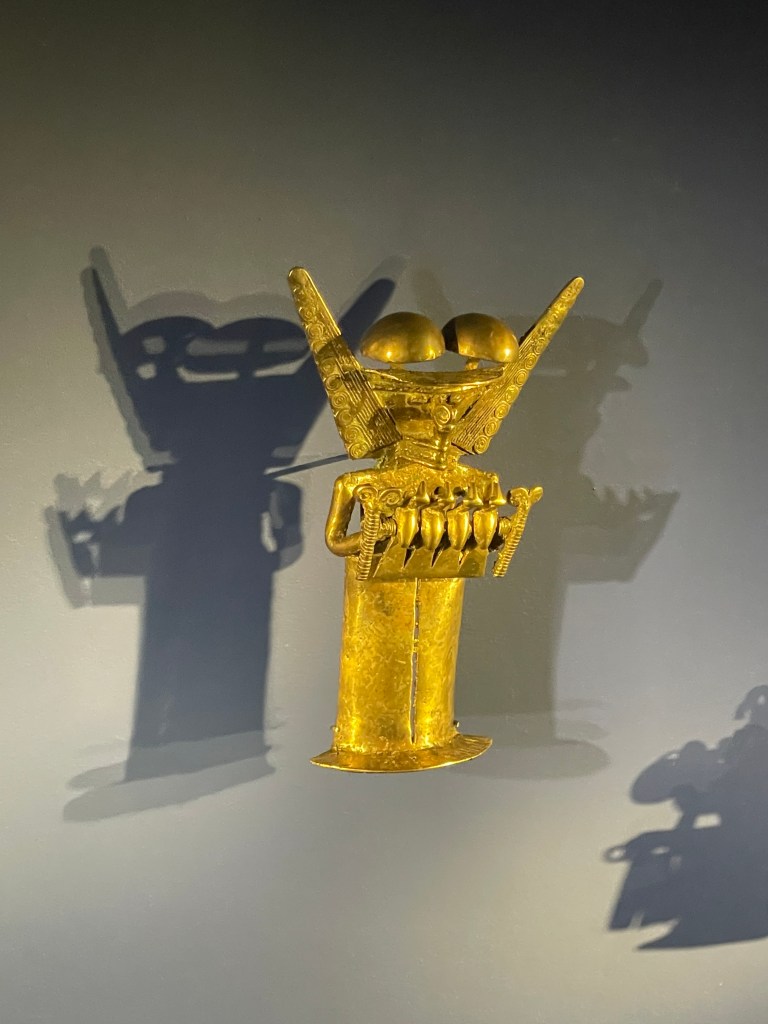
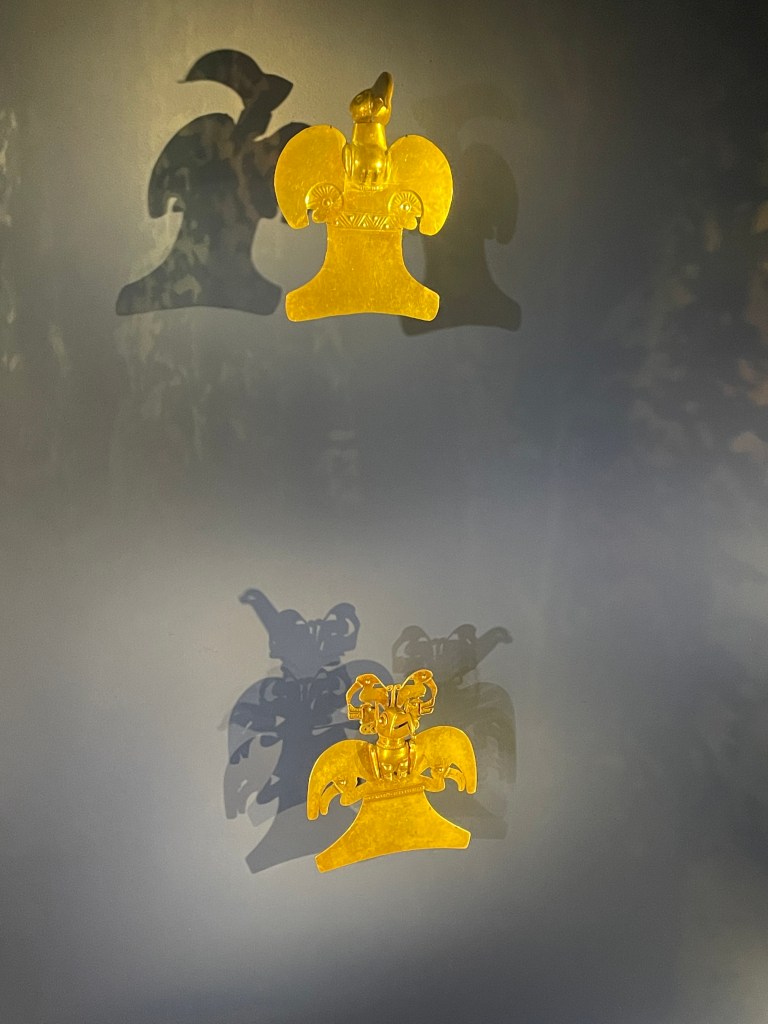
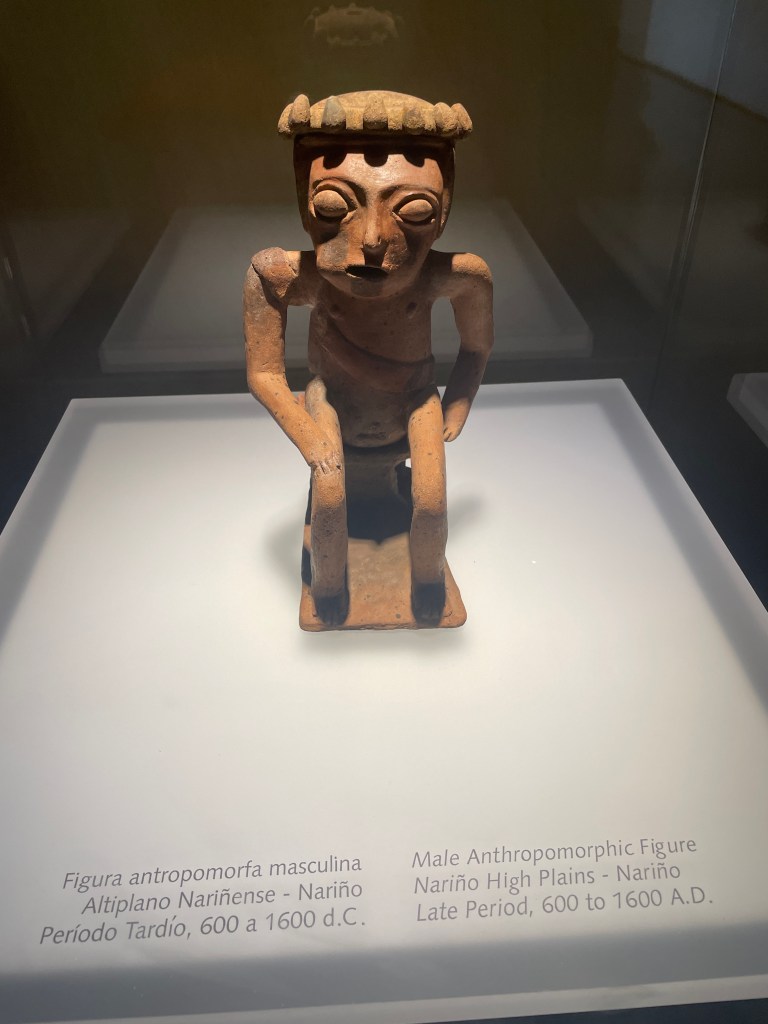
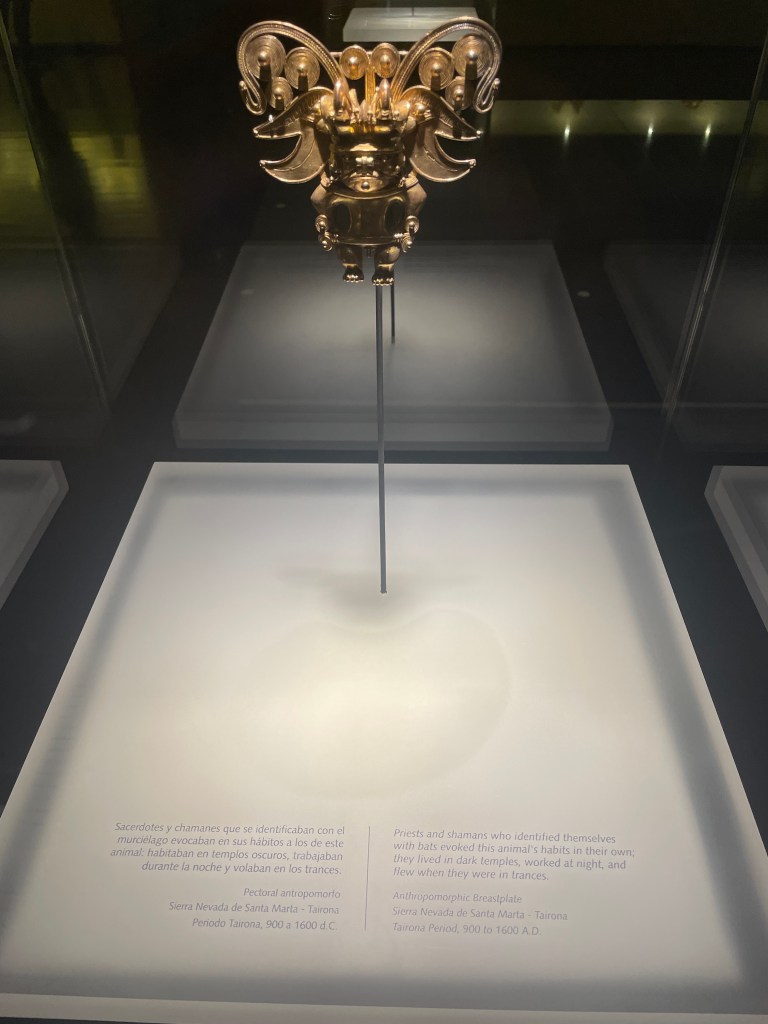
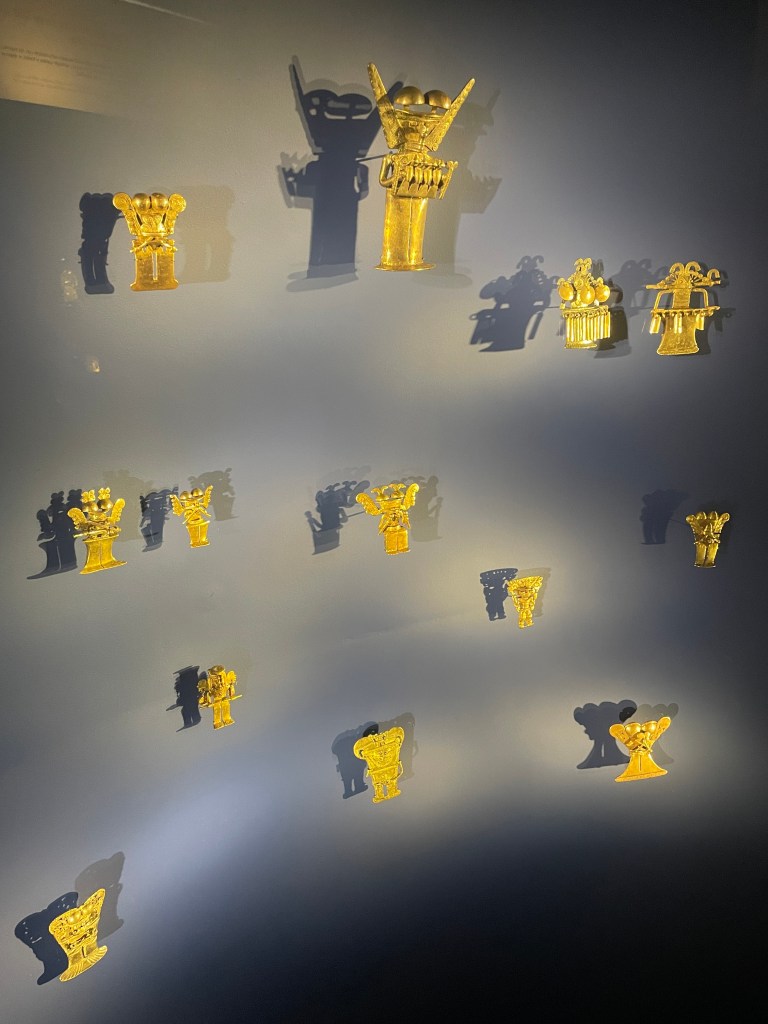
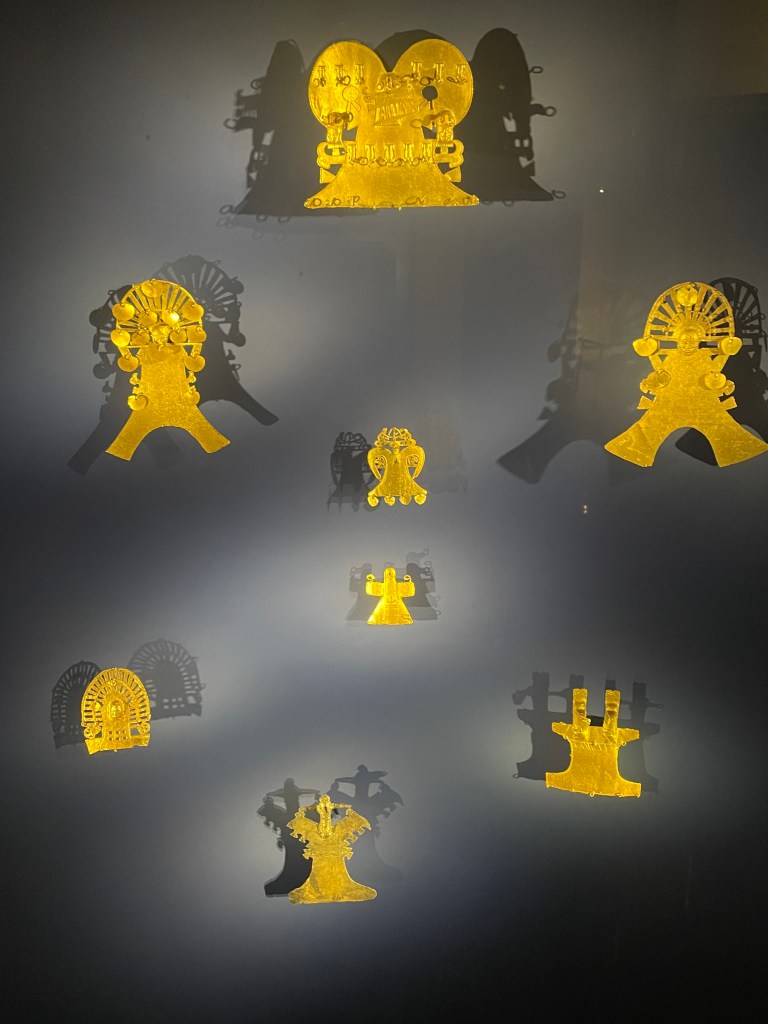
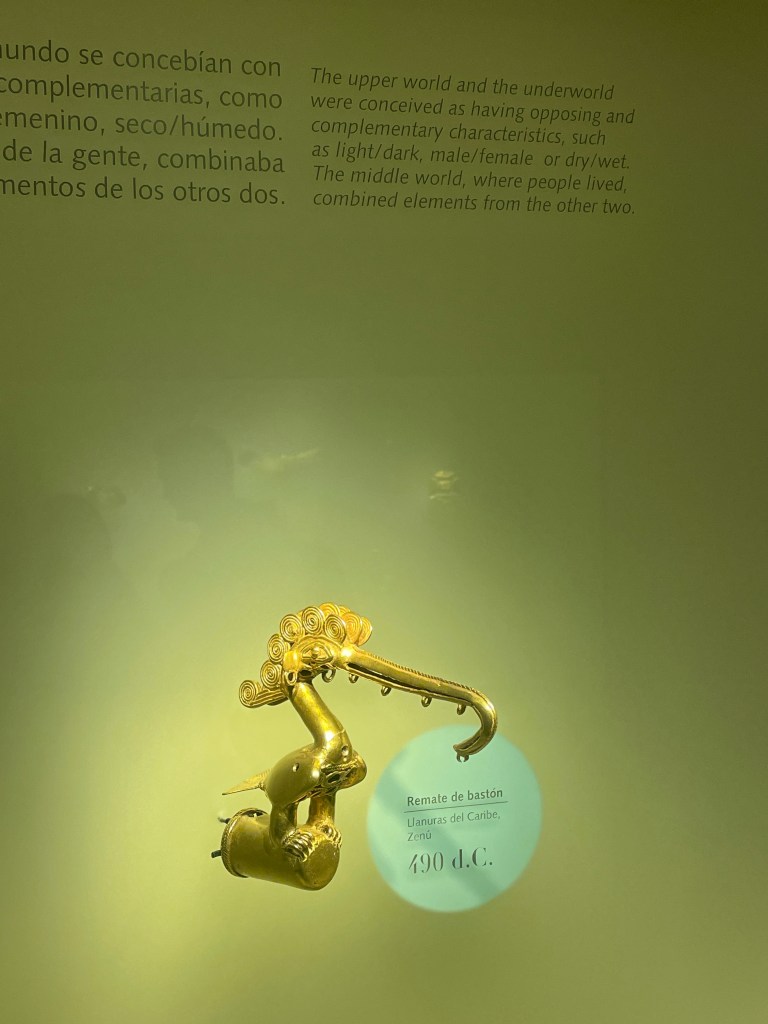
I could go on for days. The museum has four massive floors filled to the brim with wondrous artifacts and history. I would go as far as saying that Bogotá is worth a visit just because of this museum.
And since you have such a staggering dense mix of objects from such a broad variety of different cultures, it leaves you with feeling of how little you really know. Yes, Gold is beautiful but the metalsworks to me are just another example of the insane techniques and craftsmanship that existed tens of thousands of years ago already.
In my mind there is no doubt that Asia, North and South America are the “Old Continents” or “ Old Worlds” and that there is an ice cold arrogance and ignorance (or maybe just envy) with which Europeans claimed physical (and mental ) dominion over these far more advanced and richer cultures (or the animal kingdom). And richer in every possible way, whether it is spiritualism, astrology, architecture (you name it) or just the skill to live in harmony with nature without exploiting the last fucking corner of it.
I sometimes got the same feeling when traveling certain corners of Southeast Asia. Yes, i do believe in progression and science but on our ruthless pursuit of the latter there are certain aspects that we should stop ignoring.
Just turn on the fucking television or read the fucking news , we are in the midst of mental retardation in our glorification of ego and in search of our own deity.
But enough blabbering, i came out of the museum with 500 pictures more on my phone, confused , angry and totally amazed.
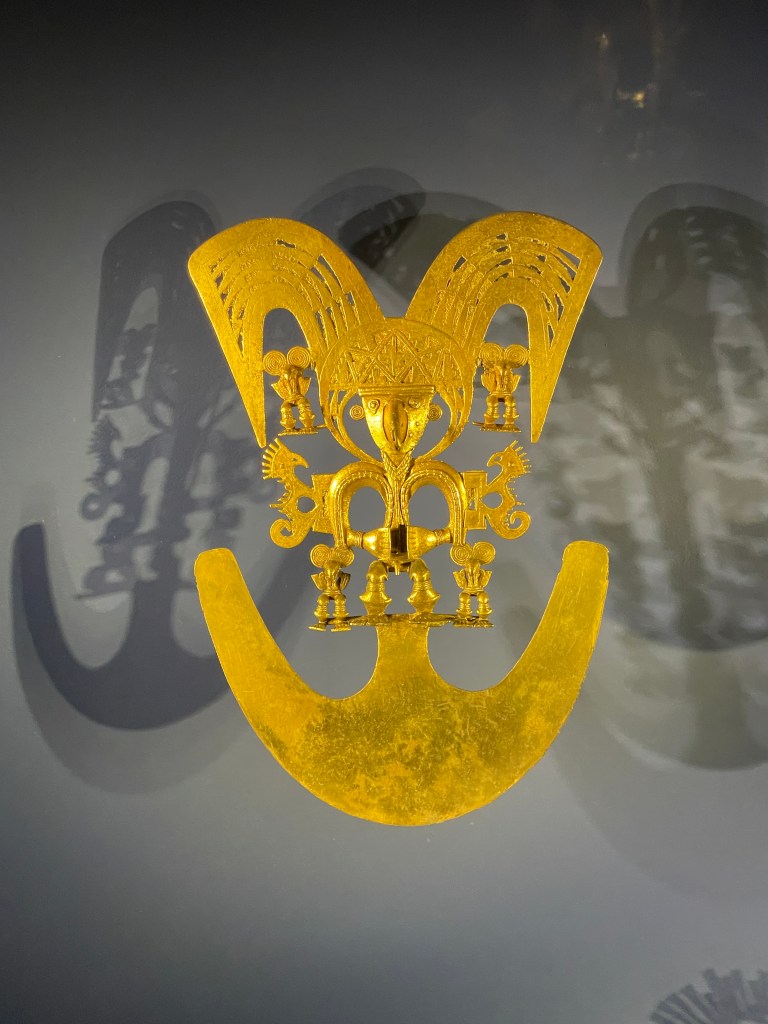
Go there if or when you get the chance.

 El viaje
Leave a reply to Colly Cancel reply